

Communication Products
Optical Transceivers · Telecom Synchronization · Network Infrastructure · Custom Solutions
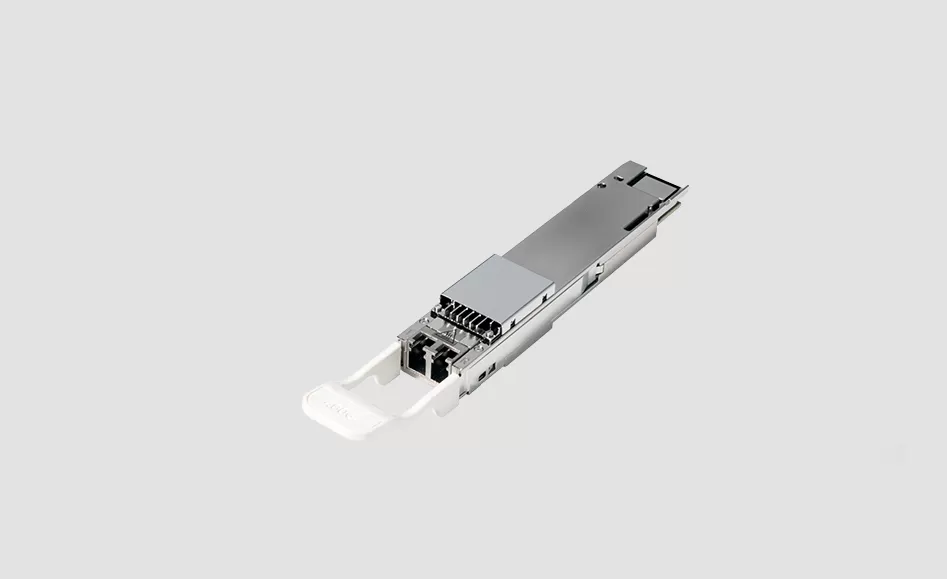
The APEX APX-BC400 is a PTP slave clock module for equipment and network segments that receive time from upstream rather than generate it. It recovers IEEE 1588v2 time and phase from a grandmaster, filters the jitter that the packet path introduces, and passes a clean reference on to the devices that depend on it.
Phase distribution is a chain of relays, not a single decision. One grandmaster serves the network, but the equipment that needs the reference is spread across many nodes, and a node that simply forwards the packets it receives passes the delay variation of the path along with them. The result is a reference that looks present at every point and is worse at the far end than at the near end, which is exactly the case that causes trouble in time division duplex radio and in measurement environments.
The APX-BC400 sits at that node. It locks to the upstream grandmaster as a slave, and either terminates the reference or acts as a boundary clock, regenerating time and phase for the ports that face downstream equipment. Its own oscillator keeps the reference stable during short interruptions of the upstream chain, and it can also take a GNSS input where a satellite view exists at the location. Outputs cover PTP on its own ports, 1PPS, 10MHz and time code, so equipment that does not read packet time can still be synchronized from the same recovered reference.
It is used inside transport equipment and at network edges where a full grandmaster would duplicate a reference that already exists in the network, in industrial and measurement installations that take time from a central source, and in projects that distribute a single traceable reference across a wide network in defined steps.
| Specification | Detail |
|---|---|
| Part Number | APX-BC400 |
| Product Type | PTP slave clock module |
| Protocol | IEEE 1588v2 PTP, slave and boundary clock operation |
| Upstream Reference | PTP grandmaster over Ethernet |
| Local Reference | Optional GNSS input where a satellite reference is available at the location |
| Packet Outputs | PTP on downstream ports for equipment that recovers time from the packet layer |
| Physical Outputs | 1PPS, 10MHz and time code outputs |
| Network Time | NTP and SNTP for management systems and servers |
| Holdover | Internal oscillator, maintained through short interruptions of the upstream chain |
| Redundancy | Reference priority with automatic switching |
| Management | Web interface, SNMP and alarm reporting |
| Form Factor | Module and rack mounted variants |
| Configuration | Interfaces and profiles set for the project before shipment, configuration recorded |
| Application | Transport nodes, network edges, industrial and measurement installations |
| Compliance | CE, RoHS |
Regenerates time and phase at the point where the reference would otherwise degrade, so downstream equipment receives a reference of the same quality as the node nearer the grandmaster.
Takes the reference from a central source and passes it to controllers, recorders and measuring equipment that need time and phase but cannot lock to a grandmaster directly.
Used where one traceable reference has to reach a wide network in defined steps, with each node regenerating the reference instead of forwarding delay variation with it.
Decide where the reference is generated and where it is merely repeated. A grandmaster is needed once; beyond that, each node that must not degrade the reference needs a slave or boundary clock function. List the downstream equipment at the node, note which of it reads packet time and which expects a discrete signal, and the APX-BC400 is then configured to that list.
Consider the upstream path as part of the design. The quality that arrives at the node depends on the path that feeds it, so the number of hops and the load on those links should be known before the node is configured. Where continuity is critical, a second reference path or a local GNSS input is used and the priority order is set so that the intended source is the one in use.
The rest of the range covers the other roles in the same plan: PTP grandmaster clocks where the reference is generated, GNSS and NTP network time servers where network time alone is required, timing modules where synchronization has to be embedded in equipment, and synchronization systems where a multi site deployment is planned as one project.
The APX-BC400 interoperates as a slave or boundary clock with standard IEEE 1588v2 equipment and serves downstream devices over PTP or through 1PPS, 10MHz and time code outputs. Send us the grandmaster type, the downstream equipment list and the profile in use, and we confirm the interfaces, the profile configuration and the form factor in one document before the order is released.
When the network already has a traceable reference and the requirement at this location is to relay it without degrading it. A grandmaster is used where the reference is generated; a slave or boundary clock is used where it is carried forward.
Not necessarily. The primary reference is the upstream grandmaster over Ethernet. A GNSS input is optional and is used at locations where a satellite view is available and continuity is critical.
The module holds over on its internal oscillator and switches to the next source in the priority list, reporting the change of state so downstream impact is known at the time.
Yes. 1PPS, 10MHz and time code outputs are available alongside the PTP ports, so non-packet equipment at the node is synchronized from the same recovered reference.
APEX is a communication technology brand focused on optical transceivers, telecom synchronization products, and network infrastructure equipment. We provide products and engineering support for telecom operators, data centers, mobile networks, and enterprise customers worldwide.
APEX GROUP is headquartered in Hong Kong, with our core team and supply chain operations based in China. We ship to customers across Asia, the Middle East, Europe, Africa, and the Americas.
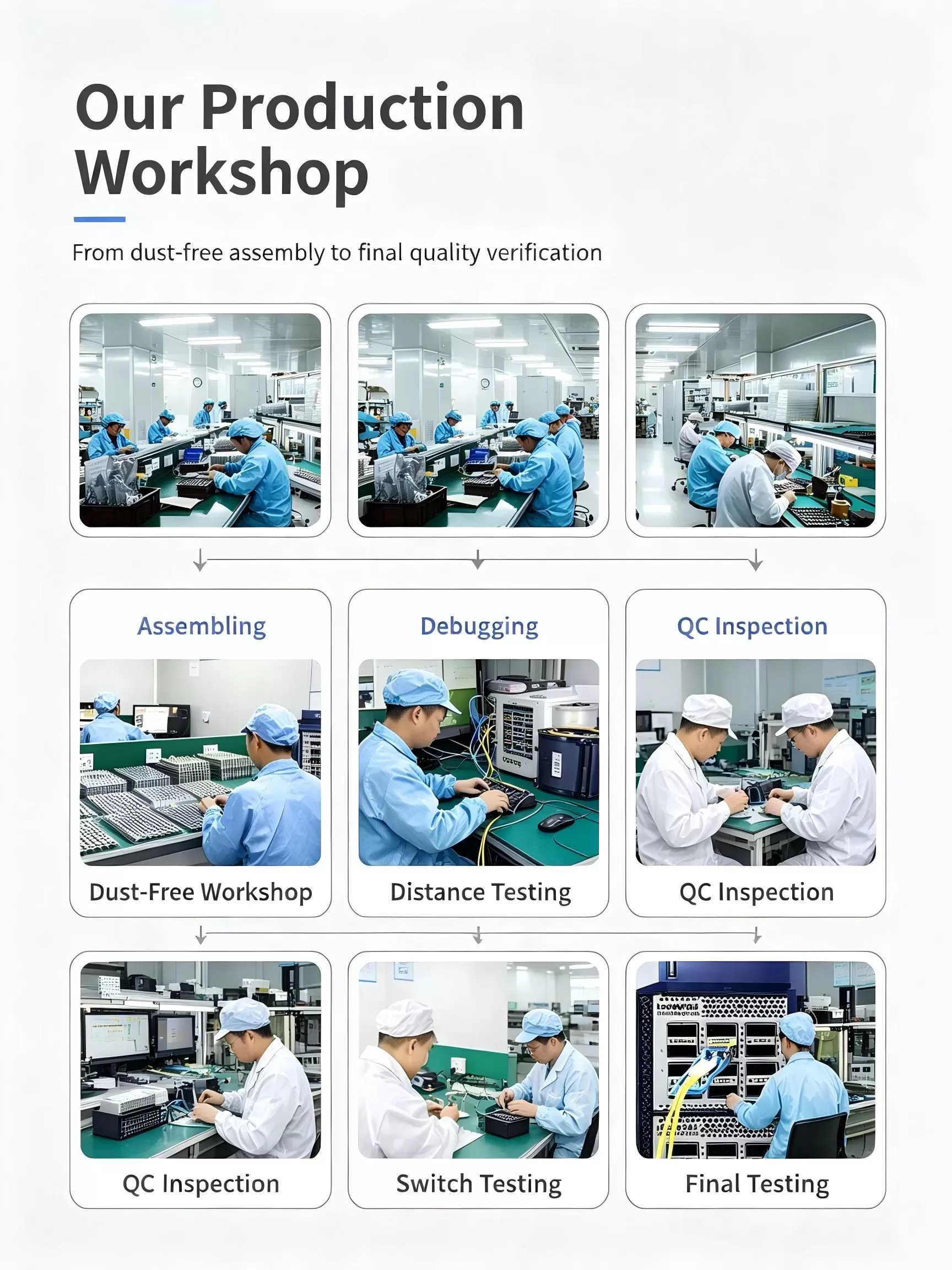
We are a brand owner with deep engineering partnerships. We control product design, specification, quality validation, and supply chain management. Our products are built to our specifications by qualified manufacturing partners, and we handle all testing, coding, and quality assurance before shipment.
Yes. We code transceivers to match the host platform requirements of major switch and router vendors including Cisco, Juniper, Arista, HPE, Huawei, Nokia, and others. Tell us your platform model and required OS version, and we will ship modules that are recognized natively by your equipment.
Datasheets, compatibility matrices, and S-parameter reports are available for all standard products. Contact our sales team or visit the product pages on our website to request documentation.
Provide us with your switch make, model, and OS version. We code the transceiver firmware accordingly before shipment. If you are testing for the first time, we recommend ordering a sample unit to validate compatibility in your specific environment before placing a volume order.
Switch vendors occasionally introduce transceiver whitelisting in new OS releases. We track major platform updates and can provide recoded firmware matching the new OS requirements. Contact technical support if your existing APEX modules stop being recognized after a switch upgrade.
Contact our sales team by email, WhatsApp, or WeChat with your part number and quantity. We will confirm pricing, lead time, and shipping options. For first-time customers, we typically recommend starting with a sample order to validate compatibility before scaling to production volumes.
We ship via DHL, FedEx, and UPS for express delivery, typically 3-7 business days to most destinations. For volume orders, we also offer air freight and sea freight options. We can ship on your courier account or ours, and we handle all export documentation.
Sample orders start from 1-2 units for evaluation. For production orders, MOQ varies by product type, typically 10-50 units for standard transceivers. Contact us for specific product MOQs.
We accept wire transfer (T/T) as our standard payment method. For established customers, we can offer net-term payment arrangements. Contact our sales team to discuss payment terms.
All APEX products come with a 3-year standard warranty against manufacturing defects. We offer advance replacement for defective units, shipping the replacement before you return the failed unit to minimize downtime. For full details, visit our After-Sales Service page.
Contact us by email, WhatsApp, or WeChat. Describe your issue with as much detail as possible, including switch model, OS version, transceiver part number, and the problem you are seeing. Our support engineers will respond within one business day.
Yes, we strongly encourage sample testing. Order 1-2 units of each model you plan to deploy. Test them in your switches with your fiber plant and traffic load. Once validated, we can proceed with production quantities.
Yes. Many of our customers are telecom operators and government networks requiring 5-10 year supply continuity. We offer lifecycle management commitments with advance notification of any changes. See our Global Supply Chain page for details on long-term supply programs.

APEX GROUP LIMITED
Phone: 85298213834
WhatsApp: 85298213834
Email: Info@apexallinone.com


