

Communication Products
Optical Transceivers · Telecom Synchronization · Network Infrastructure · Custom Solutions
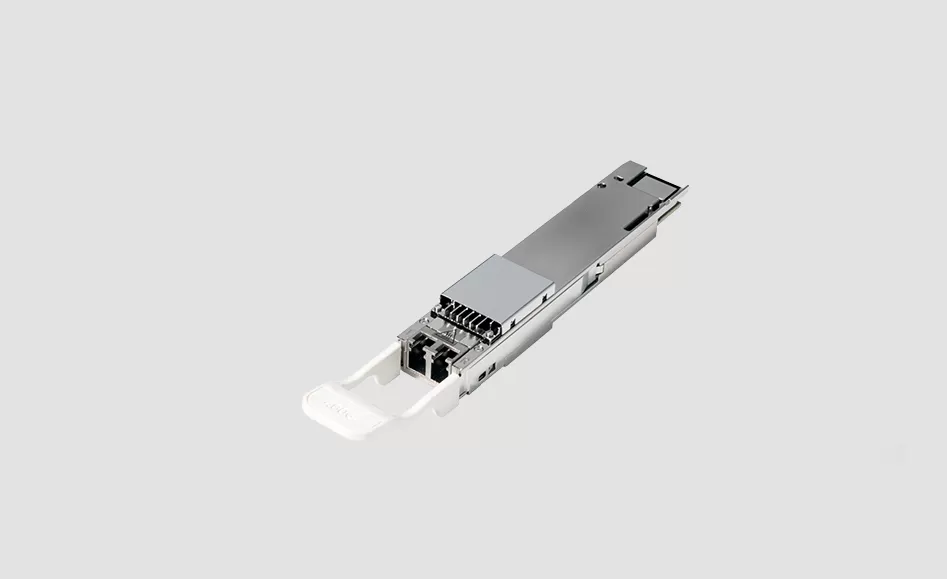
APX-CUSTOM-OTN is the project-based side of Apex: an optical transport, routing and access solution assembled around a specific network requirement instead of a fixed catalogue item. Every engagement starts with the traffic pattern, distance, protection target and growth plan the customer actually has, and ends with a working, documented network.
A typical project moves through four stages. First, requirements assessment and network design: site survey, traffic matrix, reach and OSNR budget, protection scheme and capacity roadmap. Second, equipment selection and configuration: choosing transport platforms, amplifier and passive modules, switching and routing elements, and card mixes that match the design, then configuring them for the planned services. Third, integration and delivery: rack layout, fibre and patch planning, power and cabling, commissioning, service turn-up and acceptance testing. Fourth, spares and technical support: a recommended spare set, documentation and ongoing engineering assistance.
Because the mix is chosen per project rather than fixed in advance, the same approach serves a long-haul operator route, a data center interconnect pair, a utility or railway private network and a campus backbone — with the equipment, protection and management scope set to match each environment.
| Item | Detail |
|---|---|
| Part Number | APX-CUSTOM-OTN |
| Brand | Apex |
| Scope | Custom optical transport, routing and access network solutions designed and delivered per project |
| Requirements Assessment | Site and route survey, traffic matrix, service list, distance and reach analysis, protection and availability targets |
| Network Design | Optical budget and OSNR calculation, wavelength plan, topology and protection scheme, capacity roadmap |
| Equipment Selection | Transport platforms, amplifier and passive modules, switching and routing elements, card and interface mix, power and cooling sizing |
| Configuration | Service provisioning, protection groups, in-band and out-of-band management setup, parameter tuning |
| Integration and Delivery | Rack layout, fibre and patch planning, cabling and power, commissioning, service turn-up |
| Testing and Acceptance | Optical power and OSNR verification, service and protection tests, acceptance report |
| Documentation | Network design document, as-built records, configuration backup, operating notes |
| Spares | Recommended spare board, module and optical part set based on network size and criticality |
| Technical Support | Engineering assistance during and after commissioning, troubleshooting and upgrade advice |
| Target Customers | Telecom operators, ISPs, data center operators, power and railway private networks, campus and enterprise networks |
| Engagement Model | Requirement study and proposal, design freeze, supply and integration, handover and support |
| Delivery Schedule | Confirmed per project once scope, quantities and site plan are agreed |
Transport and routing designed around existing fibre, regeneration points and protection requirements on operator and ISP routes.
High-capacity links between data centers or between a data center and its carrier handover points, with the interface mix matched to the equipment on each side.
Transport and access networks for utilities and railway operators, where reliability, remote supervision and long spans matter more than raw capacity.
Optical backbone and access layers for campuses, industrial parks and large enterprise sites, sized to the buildings and distances involved.
It starts with a requirements assessment: the traffic pattern, distances, protection targets, existing fibre and equipment, and the growth expected over the design life of the network.
No. Platforms, modules and interfaces are selected to fit the design that comes out of the assessment, so different projects can produce different configurations.
Telecom operators, ISPs, data center operators, power and railway private network owners, and campus or enterprise network operators.
Integration and delivery support are part of the scope: rack layout planning, commissioning, service turn-up and acceptance testing. Customers who prefer to integrate themselves can take design and equipment only.
Yes. Each project is handed over with a recommended spare set, a design document, as-built records, configuration backups and operating notes.
Apex works on optical transport, routing and access networks from the first requirement discussion through to handover and after-sales support. Because equipment selection follows the design rather than the other way around, a project gets the configuration its traffic, distances and protection targets call for.
The same engineering team handles optical budget planning, protection scheme choice, commissioning and acceptance testing, so responsibilities stay in one place. Every solution is delivered with documentation, a recommended spare set and continued technical support as the network grows.
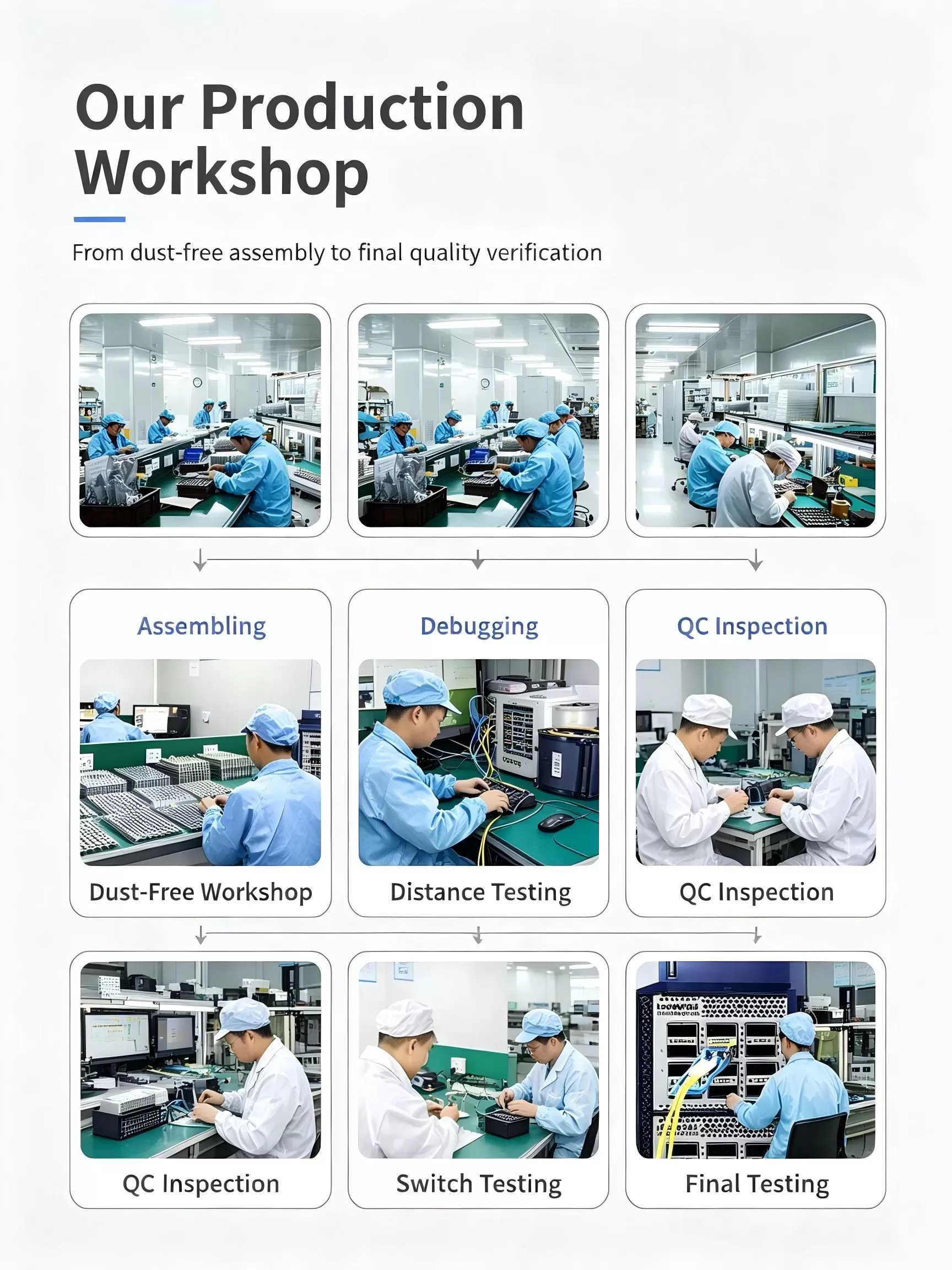
APEX is a communication technology brand focused on optical transceivers, telecom synchronization products, and network infrastructure equipment. We provide products and engineering support for telecom operators, data centers, mobile networks, and enterprise customers worldwide.
APEX GROUP is headquartered in Hong Kong, with our core team and supply chain operations based in China. We ship to customers across Asia, the Middle East, Europe, Africa, and the Americas.
We are a brand owner with deep engineering partnerships. We control product design, specification, quality validation, and supply chain management. Our products are built to our specifications by qualified manufacturing partners, and we handle all testing, coding, and quality assurance before shipment.
Yes. We code transceivers to match the host platform requirements of major switch and router vendors including Cisco, Juniper, Arista, HPE, Huawei, Nokia, and others. Tell us your platform model and required OS version, and we will ship modules that are recognized natively by your equipment.
Datasheets, compatibility matrices, and S-parameter reports are available for all standard products. Contact our sales team or visit the product pages on our website to request documentation.
Provide us with your switch make, model, and OS version. We code the transceiver firmware accordingly before shipment. If you are testing for the first time, we recommend ordering a sample unit to validate compatibility in your specific environment before placing a volume order.
Switch vendors occasionally introduce transceiver whitelisting in new OS releases. We track major platform updates and can provide recoded firmware matching the new OS requirements. Contact technical support if your existing APEX modules stop being recognized after a switch upgrade.
Contact our sales team by email, WhatsApp, or WeChat with your part number and quantity. We will confirm pricing, lead time, and shipping options. For first-time customers, we typically recommend starting with a sample order to validate compatibility before scaling to production volumes.
We ship via DHL, FedEx, and UPS for express delivery, typically 3-7 business days to most destinations. For volume orders, we also offer air freight and sea freight options. We can ship on your courier account or ours, and we handle all export documentation.
Sample orders start from 1-2 units for evaluation. For production orders, MOQ varies by product type, typically 10-50 units for standard transceivers. Contact us for specific product MOQs.
We accept wire transfer (T/T) as our standard payment method. For established customers, we can offer net-term payment arrangements. Contact our sales team to discuss payment terms.
All APEX products come with a 3-year standard warranty against manufacturing defects. We offer advance replacement for defective units, shipping the replacement before you return the failed unit to minimize downtime. For full details, visit our After-Sales Service page.
Contact us by email, WhatsApp, or WeChat. Describe your issue with as much detail as possible, including switch model, OS version, transceiver part number, and the problem you are seeing. Our support engineers will respond within one business day.
Yes, we strongly encourage sample testing. Order 1-2 units of each model you plan to deploy. Test them in your switches with your fiber plant and traffic load. Once validated, we can proceed with production quantities.
Yes. Many of our customers are telecom operators and government networks requiring 5-10 year supply continuity. We offer lifecycle management commitments with advance notification of any changes. See our Global Supply Chain page for details on long-term supply programs.

APEX GROUP LIMITED
Phone: 85298213834
WhatsApp: 85298213834
Email: Info@apexallinone.com


