Communication Products
Optical Transceivers · Telecom Synchronization · Network Infrastructure · Custom Solutions
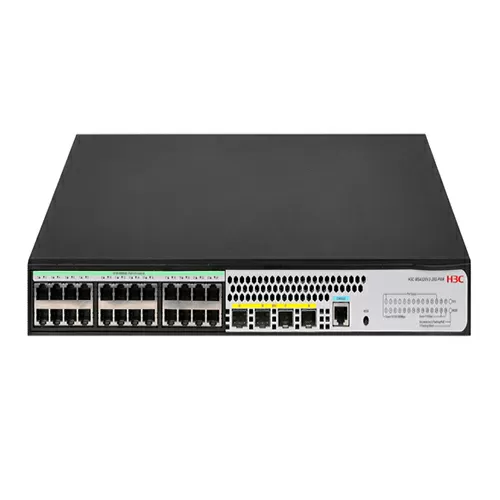
Intelligent buffer management optimizes upstream burst traffic from IP cameras, reducing latency, frame loss, and video stutter. Built-in monitoring management components enable automated endpoint discovery and remote status monitoring.
Stack up to multiple physical switches into a single logical device. Simplifies management, enables cross-device link aggregation, and delivers 1:N redundancy with sub-50ms failover.
Multi-layer security including 802.1X, MAC authentication, Portal (Triple authentication on a single port), ARP attack protection, DoS defense, EAD endpoint admission control, and SSHv2 encrypted management.
Integrated professional-grade lightning protection circuits. Select models (MS4320V3-28P, -52P) achieve 9 kV common-mode surge protection, ensuring reliable operation in harsh outdoor/edge deployments.
Full Layer 2 switching (VLAN, QinQ, STP/RSTP/MSTP, LACP, LLDP, IGMP Snooping) plus Layer 3 static routing, RIP, and OSPF. IPv4/IPv6 dual-stack with comprehensive QoS per port.
Next-generation energy-efficient chipset with auto-power-down on idle ports, IEEE 802.3az EEE, and scheduled port shutdown. Fanless design on select models for silent operation. RoHS compliant.
The MS4320V3 integrates switching, basic routing, and security protocols. Full 802.1Q VLAN support includes protocol-based VLAN, Voice VLAN, Guest VLAN, QinQ, and flexible QinQ. Layer 2 features include STP/RSTP/MSTP, 802.3x flow control, QoS congestion management, LLDP, LACP, DLDP, and broadcast storm suppression. Layer 3 supports IPv4/IPv6 static routing, dual-stack, IGMP Snooping, DHCP (Client, Server, Snooping, Relay Option 82), and DNS.
RRPP (Rapid Ring Protection Protocol) ensures sub-50ms convergence on ring topologies, independent of node count, with load sharing across rings.
Unlike standard office switches, MS4320V3 recognizes that IP camera traffic is predominantly upstream with long/bursty frames. Intelligent buffer allocation maximizes burst tolerance from downstream to upstream ports, minimizing dropped frames. Embedded monitoring components support third-party management platforms for automatic endpoint management and remote health monitoring. SDN/OpenFlow 1.3 support enables integration with intelligent video management platforms.
IRF2 virtualizes multiple physical switches into one logical unit:
Simplified Management — Configure the entire stack from any member port.
Simplified Operations — Cross-device link aggregation eliminates spanning-tree overhead.
Elastic Scaling — Add or remove members without service disruption.
High Availability — 1:N redundancy at link, device, and protocol layers with hitless failover.
Performance Multiplication — Aggregate switching capacity and port density across all members.
Single-port Triple authentication (802.1X + MAC + Portal) adapts to diverse endpoint requirements. ARP Detection validates user identity and ARP packet integrity with rate limiting. EAD endpoint admission control integrates antivirus, patch management, and access control into a unified security architecture. SSHv2, TACACS+, and RADIUS provide secure management access.
L2–L4 flow classification based on source/destination MAC, IP, TCP/UDP port, protocol type, and VLAN. Eight priority queues per port with SP, WRR, and SP+WRR scheduling. Bi-directional ACL, CAR traffic policing, port/flow mirroring, and sFlow sampling for granular traffic analysis.
Static routing, RIP v1/v2, and OSPF v1/v2/v3 with Layer 3 routed interfaces provide flexibility for routed access or distribution deployments.
Hardware-level over-current, over-voltage, and over-temperature protection with intelligent fan speed control and fault alarming. Link-level protection via LACP, STP/RSTP/MSTP, Smart Link, and RRPP ensures continuous operation in mission-critical environments.
Energy-efficient chipset and innovative architecture minimize power consumption. Auto-power-down deactivates idle ports. IEEE 802.3az EEE reduces power during low-utilization periods. Fanless models available for silent operation in noise-sensitive deployments.
| Model | Ports | PoE | Dimensions (W×D×H mm) | Max Power |
|---|---|---|---|---|
| MS4320V3-10P | 8×1GE + 2×SFP | — | 266×161×43.6 | 15 W |
| MS4320V3-28P | 24×1GE + 4×SFP | — | 440×160×43.6 | 23 W |
| MS4320V3-28S | 24×1GE + 4×SFP+ | — | 440×160×43.6 | 24 W |
| MS4320V3-52P | 48×1GE + 4×SFP | — | 440×230×43.6 | 41 W |
| MS4320V3-52S | 48×1GE + 4×SFP+ | — | 440×230×43.6 | 44 W |
| MS4320V3-20P-PWR | 16×1GE + 4×SFP | 170 W | 330×230×43.6 | 232 W |
| MS4320V3-28P-PWR | 24×1GE + 4×SFP + 4×Combo | 370 W | 440×260×43.6 | 400 W |
| MS4320V3-28S-PWR | 24×1GE + 4×SFP+ | 370 W | 440×260×43.6 | 448 W |
| Performance | |
| Switching Capacity | 672 Gbps / 6.72 Tbps |
| Forwarding Rate | 144 Mpps (28-port models) / 166 Mpps (52-port models) |
| Jumbo Frame | 9 KB |
| MAC Address Table | Up to 16K |
| Layer 2 Features | |
| VLAN | Port-based, MAC-based, Protocol-based VLAN; QinQ, Flexible QinQ; VLAN Mapping; Voice VLAN; Guest VLAN; PVLAN |
| Link Aggregation | Static & dynamic (LACP); cross-device aggregation (IRF2) |
| Spanning Tree | STP/RSTP/MSTP/PVST |
| Ring Protection | RRPP (sub-50ms convergence), Smart Link |
| OAM | 802.1ag, 802.3ah |
| Mirroring | Port mirroring, RSPAN, flow mirroring |
| Layer 3 Features | |
| IPv4 Routing | Static, RIP v1/v2, OSPF v1/v2 |
| IPv6 Routing | Static, RIPng, OSPF v3 |
| DHCP | Client, Server, Snooping, Relay (Option 82), Auto-config |
| Multicast | IGMP Snooping / MLD Snooping; Multicast VLAN |
| Virtualization | |
| IRF2 | Intelligent Resilient Framework; local & remote stacking via standard Ethernet ports; distributed device management & link aggregation |
| SDN | OpenFlow 1.3; multi-controller (EQUAL / active-standby); multi-table pipeline; Group table |
| QoS | |
| Classification | L2–L4: Src/Dst MAC, IP, TCP/UDP port, protocol, VLAN; Time-range ACL; bidirectional ACL |
| Scheduling | 8 queues/port; SP, WRR, SP+WRR; 802.1p & DSCP remarking |
| Policing | Ingress/egress rate limiting; CAR; traffic redirection; sFlow |
| Security | |
| Authentication | 802.1X, MAC, Portal (single-port Triple); RADIUS, TACACS+ |
| Access Control | Port security, port isolation, MAC learning limit, IP Source Guard, IP+MAC+Port binding, EAD |
| Threat Defense | ARP Detection & rate limiting; DoS protection; SSHv2 |
| Surge Protection | Up to 9 kV common-mode (MS4320V3-28P, -52P) |
| Management | |
| Interfaces | CLI (Console, Telnet, SSHv2); SNMP v1/v2/v3; Web GUI |
| Monitoring | RMON; sFlow; VCT cable diagnostics; DLDP; Loopback detection; BFD |
| Maintenance | XModem/FTP/TFTP upgrade; syslog; NTP; Ping/Traceroute; power/fan/temperature alarms |
| Power & Environmental | |
| Input Voltage | AC 100–240 V, 50/60 Hz |
| Operating Temperature | -10°C to 50°C |
| Operating Humidity | 5% to 95% (non-condensing) |
| Energy Efficiency | IEEE 802.3az EEE; auto-power-down on idle ports; scheduled port down |
| Manufacturer | |
| Brand | H3C (New H3C Technologies Co., Ltd.) |
In medium-to-large IP surveillance deployments, the MS4320V3 serves as the access-layer switch, delivering high-capacity switching with 10GE uplinks to aggregation. Combined with IRF2 virtualization across core, aggregation, and access layers, the network achieves simplified topology and management, 1:N resiliency, and significantly improved performance — without changing the physical topology.
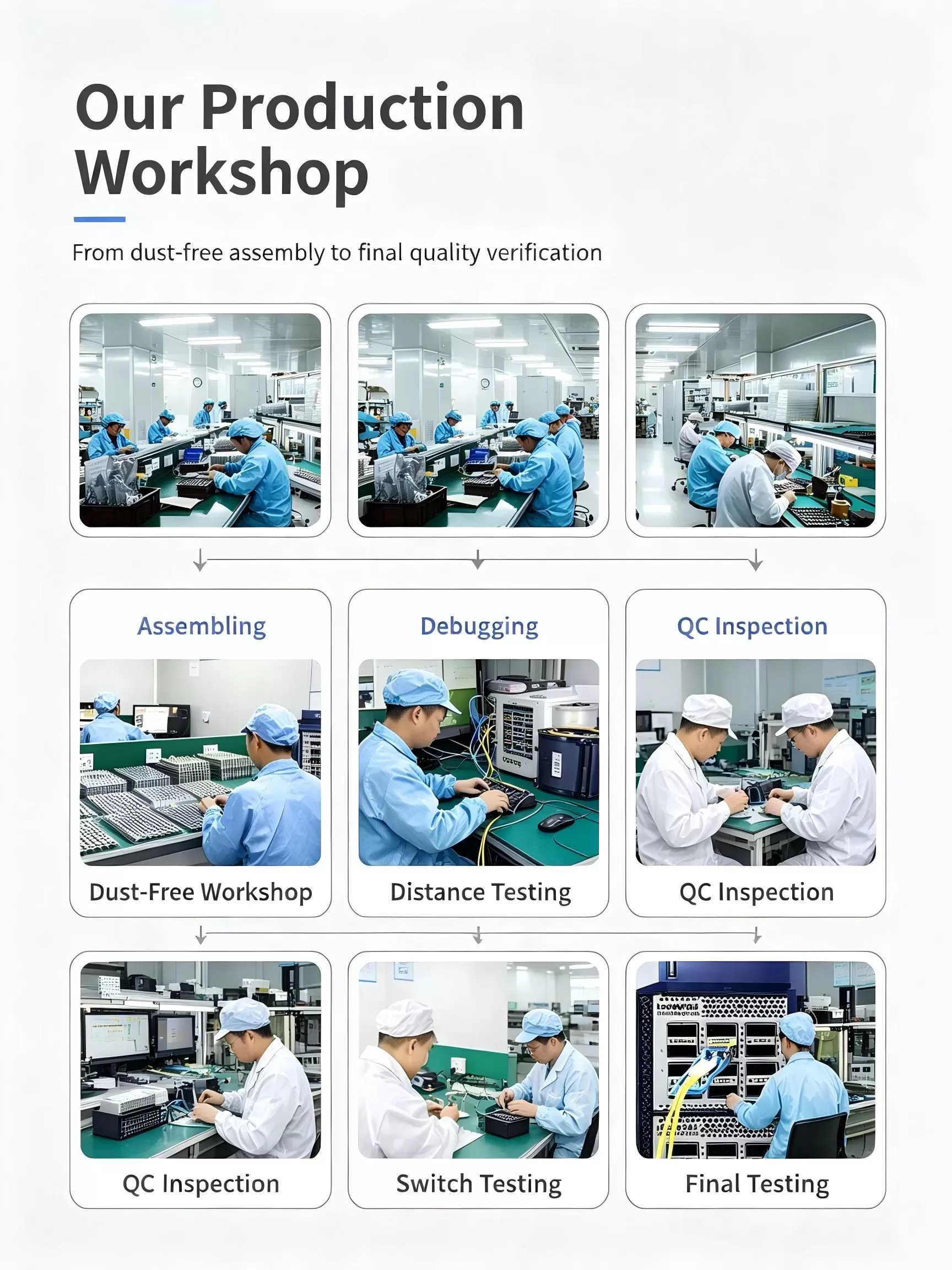
APEX is a communication technology brand focused on optical transceivers, telecom synchronization products, and network infrastructure equipment. We provide products and engineering support for telecom operators, data centers, mobile networks, and enterprise customers worldwide.
APEX GROUP is headquartered in Hong Kong, with our core team and supply chain operations based in China. We ship to customers across Asia, the Middle East, Europe, Africa, and the Americas.
We are a brand owner with deep engineering partnerships. We control product design, specification, quality validation, and supply chain management. Our products are built to our specifications by qualified manufacturing partners, and we handle all testing, coding, and quality assurance before shipment.
Yes. We code transceivers to match the host platform requirements of major switch and router vendors including Cisco, Juniper, Arista, HPE, Huawei, Nokia, and others. Tell us your platform model and required OS version, and we will ship modules that are recognized natively by your equipment.
Datasheets, compatibility matrices, and S-parameter reports are available for all standard products. Contact our sales team or visit the product pages on our website to request documentation.
Provide us with your switch make, model, and OS version. We code the transceiver firmware accordingly before shipment. If you are testing for the first time, we recommend ordering a sample unit to validate compatibility in your specific environment before placing a volume order.
Switch vendors occasionally introduce transceiver whitelisting in new OS releases. We track major platform updates and can provide recoded firmware matching the new OS requirements. Contact technical support if your existing APEX modules stop being recognized after a switch upgrade.
Contact our sales team by email, WhatsApp, or WeChat with your part number and quantity. We will confirm pricing, lead time, and shipping options. For first-time customers, we typically recommend starting with a sample order to validate compatibility before scaling to production volumes.
We ship via DHL, FedEx, and UPS for express delivery, typically 3-7 business days to most destinations. For volume orders, we also offer air freight and sea freight options. We can ship on your courier account or ours, and we handle all export documentation.
Sample orders start from 1-2 units for evaluation. For production orders, MOQ varies by product type, typically 10-50 units for standard transceivers. Contact us for specific product MOQs.
We accept wire transfer (T/T) as our standard payment method. For established customers, we can offer net-term payment arrangements. Contact our sales team to discuss payment terms.
All APEX products come with a 3-year standard warranty against manufacturing defects. We offer advance replacement for defective units, shipping the replacement before you return the failed unit to minimize downtime. For full details, visit our After-Sales Service page.
Contact us by email, WhatsApp, or WeChat. Describe your issue with as much detail as possible, including switch model, OS version, transceiver part number, and the problem you are seeing. Our support engineers will respond within one business day.
Yes, we strongly encourage sample testing. Order 1-2 units of each model you plan to deploy. Test them in your switches with your fiber plant and traffic load. Once validated, we can proceed with production quantities.
Yes. Many of our customers are telecom operators and government networks requiring 5-10 year supply continuity. We offer lifecycle management commitments with advance notification of any changes. See our Global Supply Chain page for details on long-term supply programs.

APEX GROUP LIMITED
Phone: 85298213834
WhatsApp: 85298213834
Email: Info@apexallinone.com