Communication Products
Optical Transceivers · Telecom Synchronization · Network Infrastructure · Custom Solutions
The APEX APX-GTS300 is a GNSS rubidium timing system: a satellite disciplined reference with an atomic oscillator at its core, built for stations that have to keep accurate time even when the satellite signal is gone for a long time.
Timing systems in power, transport and telecom sites are usually asked for two different things at once. They must produce the physical signals the installed equipment expects, and they must keep producing them when the reference is interrupted. A crystal oscillator answers the first requirement but not the second; the rubidium oscillator inside the APX-GTS300 is what carries the station through an outage measured in hours, keeping frequency stable and time traceable so protection records, event logs and transmission links stay consistent.
The system supplies a complete output set from one unit: 1PPS and TOD timing, IRIG-B and DCF77 time codes, NTP for the network, and 1, 5 and 10 MHz frequency references, with electrical interface types selected to match the devices in the station. Status, alarms and holdover state are visible locally and available to supervisory systems.
It is supplied as a rack mount unit for equipment rooms and substations, with the GNSS antenna, cable and protection available as one matched set so the whole reference chain is specified together.
| Specification | Detail |
|---|---|
| Part Number | APX-GTS300 |
| Product Type | GNSS rubidium timing system |
| GNSS Reference | GPS and BeiDou timing configurations |
| Oscillator | Rubidium atomic oscillator, disciplined from GNSS |
| 1PPS Accuracy | Better than 30 ns RMS while locked |
| Holdover | Hours of traceable time at the site after a reference loss |
| Timing Outputs | 1PPS, TOD, 1PPM, 1PPH |
| Time Code Outputs | IRIG-B AC, IRIG-B DC, DCF77 |
| Frequency Outputs | 1 MHz, 5 MHz, 10 MHz |
| Network Time | NTP over Ethernet |
| Alarms | Reference, antenna and holdover status to supervisory systems |
| Output Interface Types | TTL, RS232, RS422 and optical options depending on configuration |
| Mounting | Rack mount chassis |
| Application | Power, transport and telecom stations with long outage exposure |
| Compliance | CE, RoHS |
Keeps fault records and protection events on one traceable time base, which is what makes post incident analysis possible when several devices have to be compared.
Holds a stable reference for signalling, control and monitoring equipment across sites where the antenna cannot be guaranteed to stay clear.
Provides time codes and frequency references for transmission and broadcast equipment that must stay within limits during maintenance on the antenna system.
Select this system when the outage answer is holdover, not redundancy. If a station cannot justify a second antenna, or if the antenna is hard to reach and faults take hours to clear, the rubidium core is what keeps the timing signals inside their limits in the meantime.
Install the antenna as carefully as you would for any critical timing system: a clear view of the sky, a short low loss cable, surge protection at the entry point and a mechanically sound mounting. The atomic oscillator protects the station from a lost signal, but it does not compensate for a badly chosen antenna position that loses satellites several times a day.
Decide the output mix early. Protection engineers, transmission engineers and IT each ask for a different signal, and the order is configured against that list. We keep the configuration on file, so an identical station or a later expansion is a repeat order rather than a redesign.
The APX-GTS300 supplies 1PPS, TOD, IRIG-B, DCF77, 1, 5 and 10 MHz signals and NTP from one unit, so protection, transmission and IT equipment can share a single traceable reference. Send the device list with the signal each one needs, along with the outage the station must ride through, and we confirm the configuration, connector types and antenna set.
It is the part that keeps frequency stable and time traceable when the satellite reference is lost. Without it, holdover is good for minutes; with it, the station keeps usable time for hours.
That depends on the accuracy budget of the equipment being fed. Tell us the budget and the worst case outage duration and we confirm whether the rubidium configuration suits the station.
No. A well installed antenna and cable remain the primary reference. The oscillator protects the station when that reference is temporarily unavailable, and the alarms tell you when that has happened.
Yes. The time code and frequency outputs cover protection and transmission equipment, and NTP covers servers and management systems from the same reference.
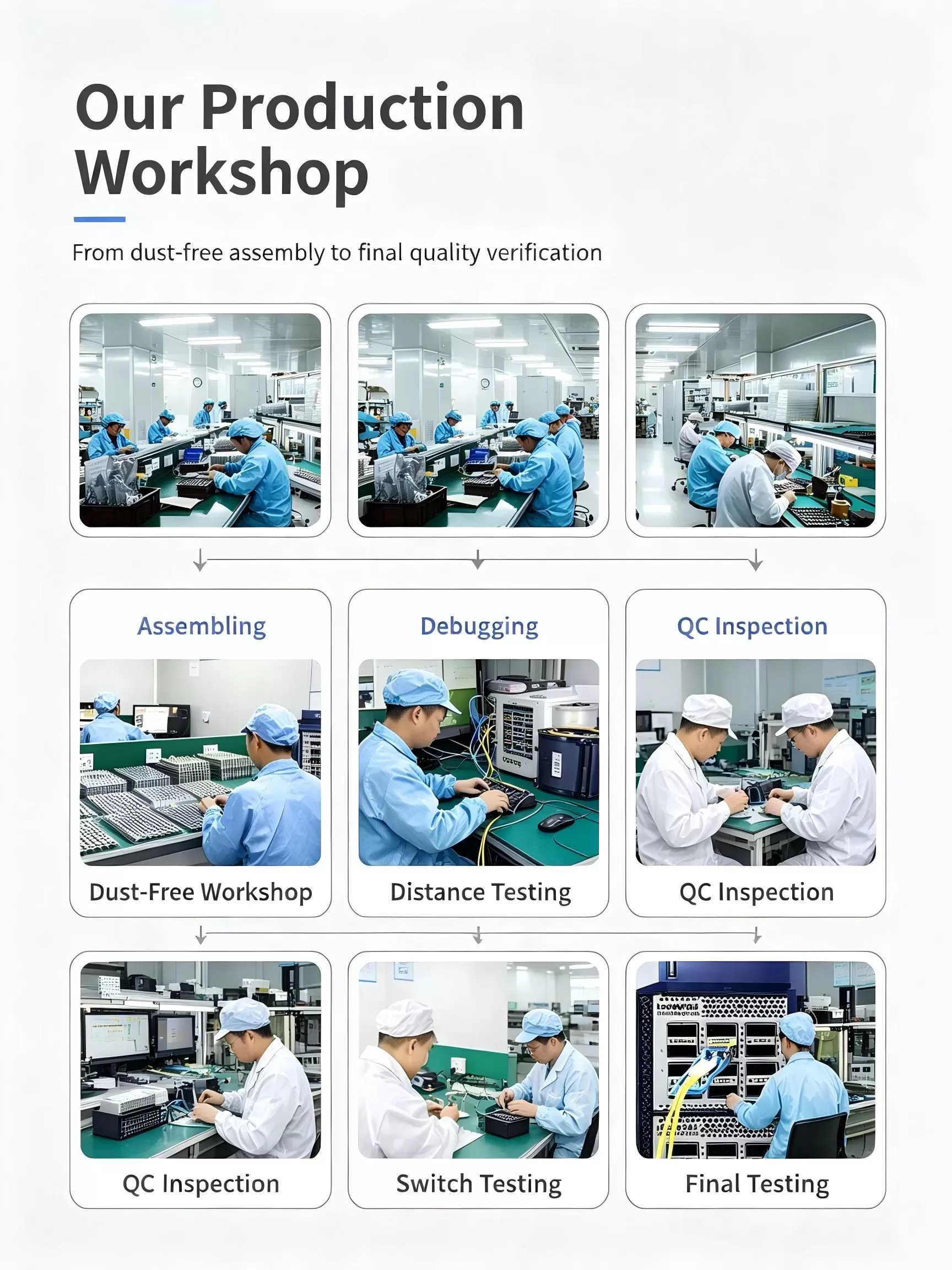
APEX is a communication technology brand focused on optical transceivers, telecom synchronization products, and network infrastructure equipment. We provide products and engineering support for telecom operators, data centers, mobile networks, and enterprise customers worldwide.
APEX GROUP is headquartered in Hong Kong, with our core team and supply chain operations based in China. We ship to customers across Asia, the Middle East, Europe, Africa, and the Americas.
We are a brand owner with deep engineering partnerships. We control product design, specification, quality validation, and supply chain management. Our products are built to our specifications by qualified manufacturing partners, and we handle all testing, coding, and quality assurance before shipment.
Yes. We code transceivers to match the host platform requirements of major switch and router vendors including Cisco, Juniper, Arista, HPE, Huawei, Nokia, and others. Tell us your platform model and required OS version, and we will ship modules that are recognized natively by your equipment.
Datasheets, compatibility matrices, and S-parameter reports are available for all standard products. Contact our sales team or visit the product pages on our website to request documentation.
Provide us with your switch make, model, and OS version. We code the transceiver firmware accordingly before shipment. If you are testing for the first time, we recommend ordering a sample unit to validate compatibility in your specific environment before placing a volume order.
Switch vendors occasionally introduce transceiver whitelisting in new OS releases. We track major platform updates and can provide recoded firmware matching the new OS requirements. Contact technical support if your existing APEX modules stop being recognized after a switch upgrade.
Contact our sales team by email, WhatsApp, or WeChat with your part number and quantity. We will confirm pricing, lead time, and shipping options. For first-time customers, we typically recommend starting with a sample order to validate compatibility before scaling to production volumes.
We ship via DHL, FedEx, and UPS for express delivery, typically 3-7 business days to most destinations. For volume orders, we also offer air freight and sea freight options. We can ship on your courier account or ours, and we handle all export documentation.
Sample orders start from 1-2 units for evaluation. For production orders, MOQ varies by product type, typically 10-50 units for standard transceivers. Contact us for specific product MOQs.
We accept wire transfer (T/T) as our standard payment method. For established customers, we can offer net-term payment arrangements. Contact our sales team to discuss payment terms.
All APEX products come with a 3-year standard warranty against manufacturing defects. We offer advance replacement for defective units, shipping the replacement before you return the failed unit to minimize downtime. For full details, visit our After-Sales Service page.
Contact us by email, WhatsApp, or WeChat. Describe your issue with as much detail as possible, including switch model, OS version, transceiver part number, and the problem you are seeing. Our support engineers will respond within one business day.
Yes, we strongly encourage sample testing. Order 1-2 units of each model you plan to deploy. Test them in your switches with your fiber plant and traffic load. Once validated, we can proceed with production quantities.
Yes. Many of our customers are telecom operators and government networks requiring 5-10 year supply continuity. We offer lifecycle management commitments with advance notification of any changes. See our Global Supply Chain page for details on long-term supply programs.

APEX GROUP LIMITED
Phone: 85298213834
WhatsApp: 85298213834
Email: Info@apexallinone.com