


News

Telecom Carrier Network Solution
End-to-End 5G Transport Network & Metro Core Upgrade with Optical Technologies
Comprehensive Optical Module Solutions for Telecom Operators
Solution Overview
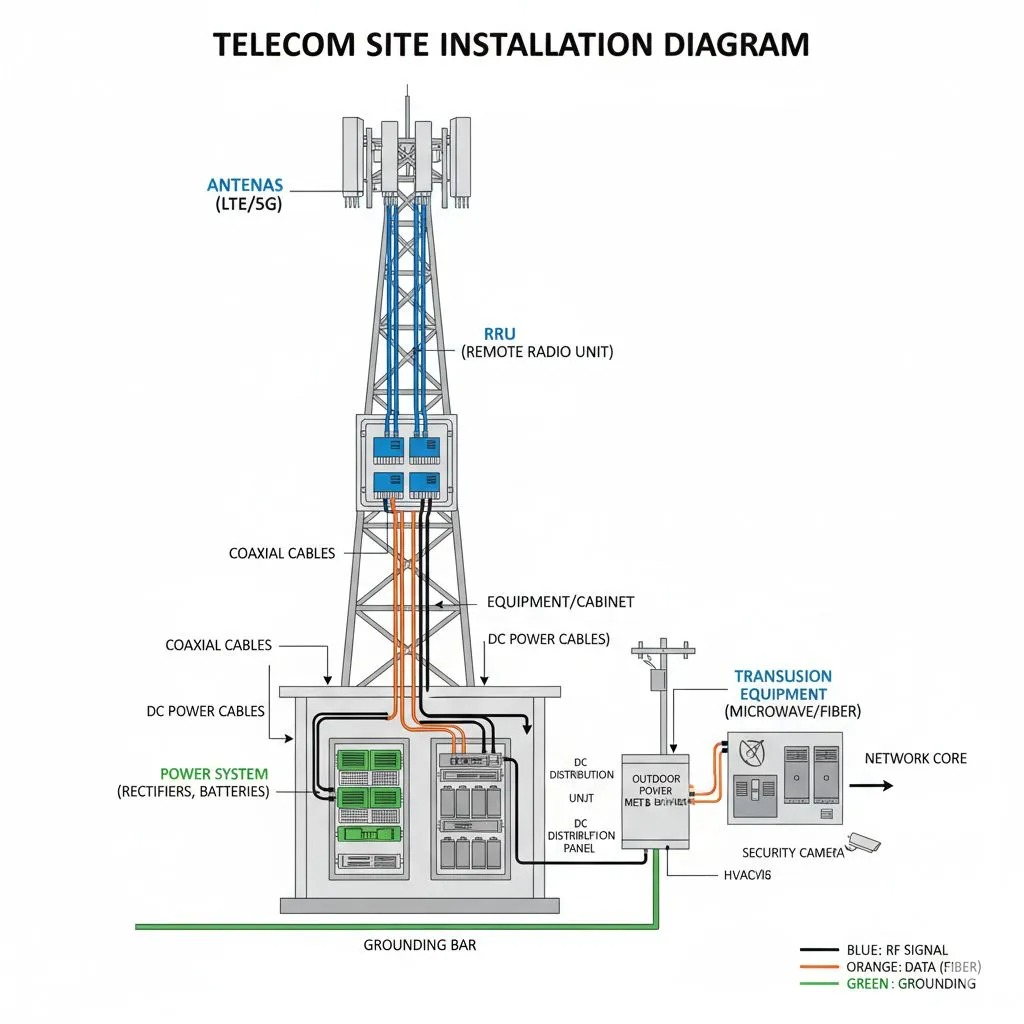
This solution addresses the challenges faced by Tier-1 telecom operators in upgrading their transport networks to support 5G services, expanding fiber capacity, and reducing operational costs. The deployment includes advanced optical modules, amplifiers, and WDM systems across fronthaul, midhaul, and backhaul segments, enabling high-bandwidth, low-latency connectivity for 5G services while maximizing existing fiber infrastructure.
5G fronthaul optical modules
Telecom DWDM solutions
Carrier-grade optical transceivers
Metro transport network upgrade
Long-haul optical amplifiers
OTN switching solutions
Coherent optics for carriers
Mobile backhaul connectivity
Network function virtualization
Fiber capacity expansion
400G ZR for DCI
Carrier Ethernet solutions
5G Fronthaul Segment
Challenge: Low-latency, high-density connectivity between 5G base stations and centralized units
Solution: 25G/50G eCPRI optical modules with precise timing synchronization
Key Components:
•25G SFP28 BiDi modules
•50G SFP56 PAM4 modules
•Industrial temperature range (-40°C to 85°C)
Midhaul & Backhaul
Challenge: Aggregating traffic from multiple sites with high reliability and scalability
Solution: 100G/400G coherent optics with advanced FEC and monitoring
Key Components:
•100G QSFP28 coherent modules
•400G QSFP-DD ZR/ZR+ modules
•Carrier-grade reliability (10+ years lifespan)
Challenge: Maximizing fiber capacity for growing traffic between major hubs
Solution: DWDM systems with flexible grid and programmable transponders
Key Components:
•400G/800G coherent muxponders
•ROADM-based optical layer
•EDFA/Raman hybrid amplifiers
| Network Segment | Distance | Bandwidth Requirements | Critical Parameters | Optical Technology |
|---|---|---|---|---|
| 5G Fronthaul | 0-20 km | 25G/50G per link | Latency < 100μs, Sync accuracy ±130ns | Direct detect, grey optics |
| 5G Midhaul | 20-80 km | 100G/200G aggregation | High reliability, Network slicing | Coherent, DWDM-ready |
| Backhaul to Core | 80-600 km | 200G/400G per wavelength | Carrier-grade availability (99.999%) | Coherent with SD-FEC gain |
| Metro Core | Intra-city | 400G/800G, up to 16T per fiber | Flexible grid, colorless/directionless | Flexible coherent, ROADM |
| Long Haul | 600+ km | 200G/400G, submarine-ready | Ultra-low noise, high OSNR | Coherent with Raman amplification |
Key Optical Components for Telecom Networks
Transceivers: Carrier-grade optical modules with extended temperature range, enhanced DDM, and 10-year lifespan
Amplifiers: EDFA for C+L bands, Raman amplifiers for ultra-long haul, hybrid amplifiers for metro networks
WDM Systems: Flex-grid ROADMs, CDC (Colorless, Directionless, Contentionless) architecture, high-channel count mux/demux
Monitoring & Control: Optical channel monitors, OTDR integration, SDN-controlled optical layer
Detailed Product Specifications
| Product Category | Specifications | Quantity (Typical Deployment) | Key Features |
|---|---|---|---|
| 25G SFP28 BiDi | 1270/1330nm, 20km, Class C+ | 500-5,000 units | Single fiber, cost-effective fronthaul |
| 100G QSFP28 LR4 | 4x25G WDM, 10km, DDM | 200-2,000 units | Data center interconnect, aggregation |
| 400G QSFP-DD ZR | Coherent, 80-120km, SD-FEC | 50-500 units | Metro DCI, pluggable coherent |
| DWDM Mux/Demux | 96 channels, flex-grid, 75GHz spacing | 10-100 units | Fiber capacity expansion, ROADM nodes |
| EDFA Amplifiers | 17/23dBm output, dual-stage, C-band | 20-200 units | Signal boosting, in-line amplification |
| Coherent Muxponder | 1.2T capacity, OTN switching, ODUflex | 5-50 units | Service aggregation, grooming |
Primary Challenges for Telecom Operators
Fiber Exhaust: Limited dark fiber availability in urban areas with growing bandwidth demands
5G Latency Requirements: Ultra-reliable low-latency communication (URLLC) needs <1ms end-to-end
Operational Complexity: Multiple network layers (IP, Ethernet, OTN, optical) requiring unified management
Cost Pressure: Need to reduce cost per bit while increasing capacity and services
Technology Migration: Coexistence of legacy TDM services with new packet-based 5G traffic
Spectrum Efficiency: Deploy flex-grid ROADMs with 75GHz spacing instead of fixed 100GHz, increasing capacity by 33%
Coherent Technology: Implement 400G ZR/ZR+ pluggables for metro distances, replacing separate transponder/muxponder systems
Network Automation: SDN-controlled optical layer with zero-touch provisioning and AI-based failure prediction
Unified Management: Single pane of glass for IP, Ethernet, and optical layers with cross-layer optimization
Disaggregated Architecture: White box switches with merchant silicon and open line systems for vendor flexibility
Quantifiable Benefits for Telecom Operators
CAPEX Reduction: 40% lower cost per bit with 400G coherent compared to 100G technology
OPEX Savings: 60% reduction in power consumption with modern coherent DSPs and optimized amplifiers
Fiber Utilization: 16Tbps capacity on single fiber pair using C+L band amplification and flex-grid
Service Velocity: 90% faster service provisioning with SDN automation and programmable optics
Revenue Opportunities: Enable new 5G services (URLLC, mMTC) and enterprise DCI offerings
Deployment Timeline & Phases
| Phase | Duration | Focus Areas | Key Deliverables |
|---|---|---|---|
| Phase 1: Assessment | 1-2 months | Network audit, traffic analysis, requirements gathering | Architecture design, Bill of Materials |
| Phase 2: Core Upgrade | 3-4 months | Metro core DWDM, coherent 400G deployment | Core network modernization, initial capacity boost |
| Phase 3: Aggregation | 2-3 months | 5G midhaul/backhaul, edge connectivity | Regional network readiness for 5G |
| Phase 4: Access Modernization | 4-6 months | Fronthaul deployment, last-mile fiber enhancement | End-to-end 5G transport capability |
| Phase 5: Optimization | Ongoing | Performance tuning, automation, expansion planning | Operational excellence, scalability roadmap |


