Knowledge Center
Technology Insights · Industry Trends · Product Knowledge · Application Notes · News & Updates
With the mass production and deployment of NVIDIA's GB200/300 NVL72 full-rack systems, as well as the release and development of the Vera Rubin NVL72 platform, Scale-Up (intra-rack chip interconnection) and Scale-Out (large-scale cross-rack interconnection) have become core topics in data center architecture planning.
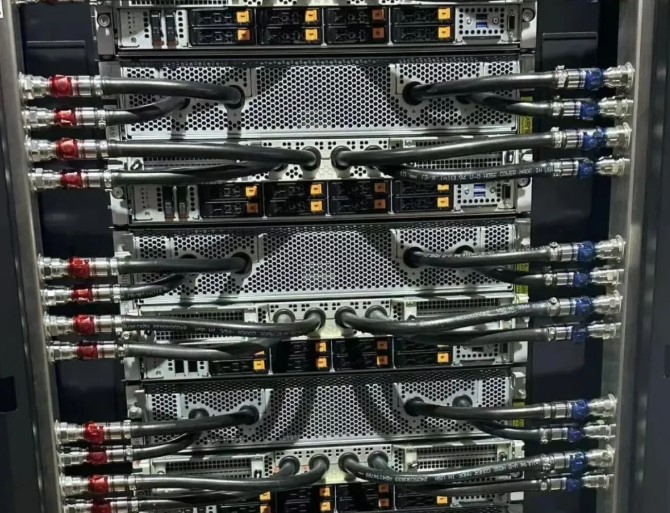
High-density GPU interconnection inside the cabinet is required, with 144 GPUs needing to achieve PB/s-level interconnection. For cross-cabinet large-scale GPU cluster interconnection, traditional copper cables can no longer meet the demand for long-distance high-speed data transmission.
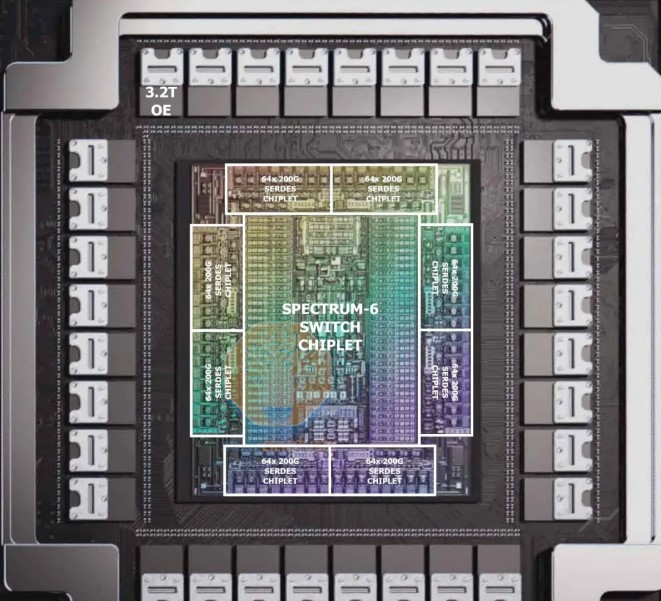
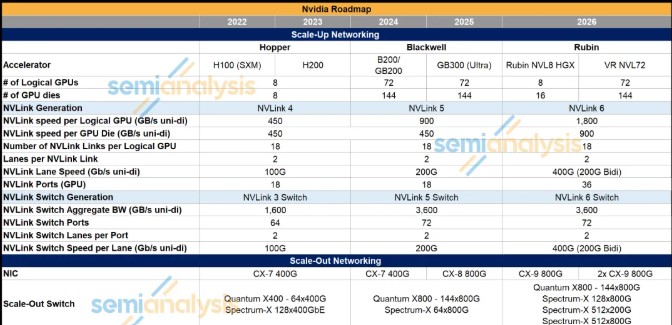
Statement:This article adopts partial legend data from semi-analysis.
Limitations of Copper Cables
Traditional electrical transmission solutions using copper cables are facing three core constraints and can no longer meet the massive data movement requirements of AI data centers:
Energy Consumption Black Hole: The 1.6Tbps copper cable solution consumes up to 30W of power, far exceeding that of optical communication solutions.
Heat Dissipation Pressure: Copper cables exhibit low heat dissipation efficiency under high-density deployment, becoming an obstacle to PUE optimization in data centers.
In contrast, CPO components are the exact opposite. As a core evolutionary direction of optical interconnect technology, Co-packaged Optics (CPO) integrates optical engines directly with computing chips in a single package, delivering:
According to TrendForce's forecast, the penetration rate of CPO in optical communication modules for AI data centers will increase year by year and is expected to reach **35% by 2030**, marking that optical interconnect technology will move from the laboratory to large-scale commercialization.
At present, NVIDIA is achieving full deployment of optical interconnects through two generations of architectures:
Rubin (short-term): Dual-layer network topology, taking the lead in realizing "replacing copper with optical fibers" inside server racks.
The sixth-generation NVLink delivers 3.6TB/s bandwidth per GPU, and the total bandwidth of the NVL72 rack reaches 260TB/s (35×72). CPO technology will be deployed on a small scale to verify its feasibility and stability.
Feynman (the successor to Rubin, medium to long term):
Large-scale cross-rack optical interconnection becomes standard, realizing the vision of an "all-optical data center". CPO technology achieves full maturity, with yield rate improved to over 90% and costs reduced significantly. Together with HBM4, liquid cooling and other technologies, it will build a new ecosystem for AI computing power.
| Point in time | Key milestones | TrendForce forecasts |
|---|---|---|
| 2026 | The inaugural year of CPO commercialization: small-batch verification of 1.6T CPO. | Penetration rate: 3%–5%, yield rate: 80%+ |
| 2028 | Large-scale deployment and maturity of 3.2T CPO technology. | Penetration rate exceeds 30%, and traditional copper cable solutions are replaced. |
| 2030 | CPO becomes the mainstream interconnect solution. | Penetration rate reaches 35%, with a market size exceeding 100 billion RMB. |
Overall, the network architecture is shifting from "copper-dominated, fiber-assisted" to "fiber-dominated, copper-assisted"; cabinet design places greater emphasis on optical interconnect channel and thermal system optimization to support high-density GPU deployment; the cost structure of network equipment procurement is changing, with CPO switches becoming the mainstream choice.
2026 is defined as the inaugural year of CPO commercialization, with 1.6T CPO entering small-volume delivery. The market size of optical modules is expected to approach 100 billion yuan, driven by a surge in demand for 800G/1.6T products. Segmented sectors including Micro LED, silicon photonic chips, and high-speed connectors embrace growth opportunities. NVIDIA strengthens its market dominance by building an ecosystem around its Quantum-X CPO switches.
Traditional copper cable manufacturers are under pressure to transform, while optical communication companies (such as Innolight, Eoptolink, etc.) are entering a golden period. Advanced packaging manufacturers like TSMC have become core players in the CPO supply chain with CoWoS/SoIC technologies.

APEX GROUP LIMITED
Phone: 85298213834
WhatsApp: 85298213834
Email: Info@apexallinone.com