APEX

News
Home > News > News > What are the different types of dedicated lines commonly used in enterprise networks?

News Navigation

Hot Articles

Recommend Articles

What are the different types of dedicated lines commonly used in enterprise networks?

Time: 2026-02-09 15:45:15
Number of views: 1864
Writting By: Admin

In enterprise networks, lines commonly referred to as "leased lines" generally share several common characteristics:

  • The bandwidth is fixed, not "maximum available".
  • The line is delivered to enterprise users.
  • There is a clear service agreement (SLA).
  • Stability and availability take precedence over regular broadband.
  • In most cases, public IP addresses or private addresses are supported.

If a line is significantly congested during peak hours, experiences large speed fluctuations, and requires waiting in line to report problems, then even if it has "dedicated line" in its name, the actual experience is closer to that of regular broadband.

Some dedicated lines are for stable internet access.

Some are for interconnecting branch offices.

Some are for cross-regional or cross-national visits.

Some dedicated lines are essentially for supporting data centers or disaster recovery systems.

If the type is not distinguished, the following situation can easily occur:

  • The actual need was simply for stable internet access, but a very expensive enterprise-grade dedicated line was chosen.
  • They needed branch interconnection, but only installed a single ordinary internet leased line.
  • The problem with the slow network isn't whether it's a dedicated line or not, but rather a mismatch in network configuration.

The most common type: Internet leased lines

Internet leased lines can be understood as:

A dedicated, fixed-bandwidth internet access line provided by the operator to the enterprise.
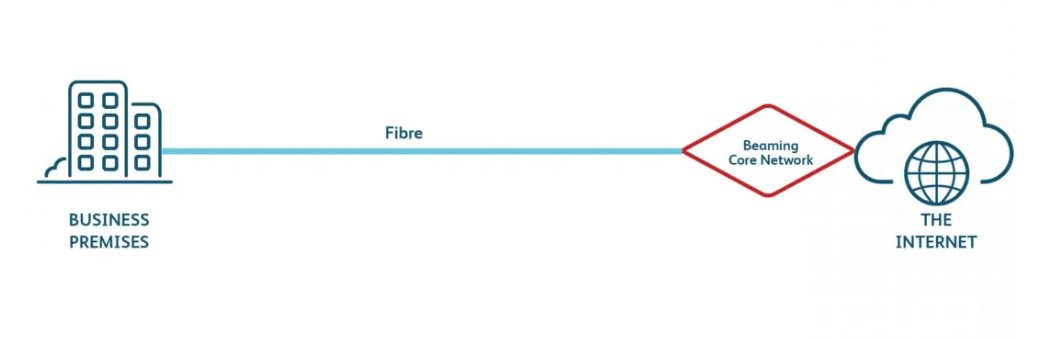
It connects directly to the operator's backbone network and does not share access resources with home broadband users.

Common specifications include 50M, 100M, 200M, 1G, etc., and the uplink and downlink are usually symmetrical.

The main difference between it and regular broadband

Comparison itemsOrdinary broadbandInternet leased line
broadbandsharedExclusive
rateMaximum reachFixed
peak periodVulnerableRelatively stable
SLAAlmost noneWith clear guarantees
Public IPGenerally noneAvailable for application

This is also the type that many companies choose when "starting with a dedicated line for the first time".

Which scenarios is it suitable for?

  • Single office location
  • Primarily uses cloud services, SaaS, and internet businesses.
  • Stability is required, but the network structure is relatively simple.
  • No complex multi-branch interconnection requirements

Tier 2 Leased Line: A More "Transparent" Form of Leased Line

Tier 2 leased lines typically refer to:

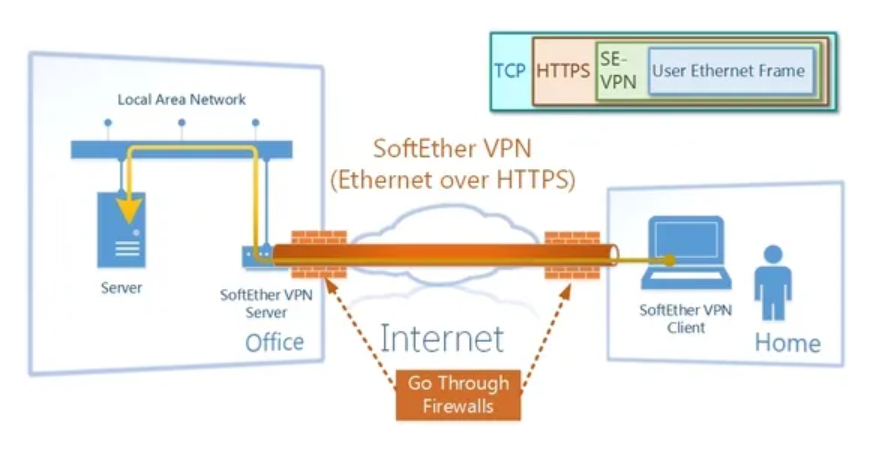
On the Layer 2 network, operators provide users with dedicated channels connecting two or more sites.

For users, the intermediate carrier network is almost "invisible," and the two sites are as if they are directly connected by a very long network cable.
Common names include:

L2 leased lines, Ethernet leased lines, Layer 2 transparent channels, etc.

Features of Layer 2 Dedicated Lines

  • Both ends are in the same Layer 2 network
  • IP, routing, and protocols are entirely under the user's control.
  • Low latency and jitter
  • The operation, maintenance, and configuration complexity is relatively high.

Simply put:

It offers a high degree of freedom, but also requires greater network management capabilities.

Common use cases

  • Interconnection of data centers in the same city
  • Primary and backup data centers
  • Disaster recovery link
  • Business systems that are highly sensitive to latency

MPLS VPN Leased Line: A Traditional Enterprise Networking Solution

MPLS VPN leased lines are a type of:

A private network for enterprises built by operators within their backbone network.

Once branch offices are connected, they can communicate directly with each other without going through the public network.

Its advantages and limitations

advantage:

  • High stability
  • Network quality is controllable
  • Branch interconnection is simple
  • Low maintenance pressure

Limitations:

  • High cost
  • The activation period is relatively long.
  • Relatively limited flexibility
  • Slow expansion speed

Therefore, it is more commonly found in traditional industries that have extremely high requirements for stability.

Which companies are still using it extensively?

  • Financial institutions
  • Government and enterprise units
  • National large enterprises
  • Services with extremely low tolerance for network outages

International Dedicated Line / Cross-border Dedicated Line

Common issues encountered when accessing the internet across borders include:

  • Route detour
  • High latency
  • jitter and packet loss
  • Unstable access quality

The core purpose of international leased lines is to provide more stable and predictable network quality over cross-border links.

Common forms

  • International Internet leased line
  • International MPLS Leased Line
  • Overseas node access
  • Cross-border Tier 2 Dedicated Line

Which businesses are suitable for it?

  • Overseas branch office
  • Cross-border collaborative system
  • Cross-border e-commerce
  • Overseas data center access

Dedicated line + SD-WAN

Increasingly common combination methods

SD-WAN is not a leased line, but a network usage method.

It can:

  • Using multiple dedicated lines or broadband simultaneously
  • Automatic route selection based on real-time quality
  • Improve link utilization
  • Reduce reliance on a single dedicated line

Many companies' network architecture has now evolved from "relying on only one dedicated line" to:

Dedicated lines are the primary method, with multiple links used in conjunction.

Determine what type of dedicated line your company uses.

We can start with a few practical issues:

  1. Is the bandwidth fixed?
  2. Has the peak period slowed down significantly?
  3. Are the branches naturally interconnected?
  4. Is the business directly exposed to the public internet?
  5. Is the operations and maintenance team connected to the enterprise dedicated line team or the regular customer service team?

These questions can generally help determine the type of leased line without requiring in-depth technical details.

Article Tags: