

Communication Products
Optical Transceivers · Telecom Synchronization · Network Infrastructure · Custom Solutions
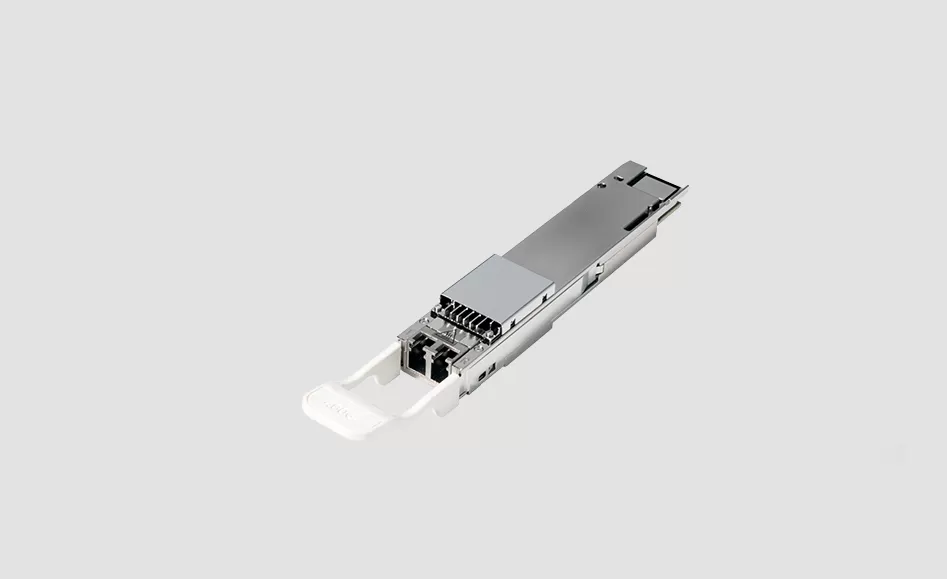
Mid-haul is the link between the distributed unit at or near the radio site and the centralised unit further back. It is not a fronthaul link: the traffic is already packetised and aggregated, distances are longer, and the span usually runs between two aggregation points rather than between two units in one shelter. One mid-haul link can collect the traffic of a group of sites, so the port rate is set by how many sites sit behind it and how much of that traffic is latency-sensitive.
50G is the rate most often used for that layer today, with 25G at the site edge and 100G where a link aggregates several groups or begins to carry data centre traffic. Choosing the optic is mostly a question about span, ring layout and temperature; only then about the module.
50G gives a clean step above the 25G ports that dominate the radio edge without the cost and power of a 100G port on every mid-haul span. Two form factors matter: 50G SFP56, which keeps the SFP-family cage and one lane of PAM4, and 50G QSFP28, which reaches the same rate with two 25G lanes and suits hosts already built around QSFP cages. Where the span carries aggregated traffic from many sites, or the operator is planning to consolidate centralised units, 100G QSFP28 with LR4 or ER4 optics is the usual upgrade path and shares the same fibre.
| Module | Rate | Media / wavelength | Reach | Typical mid-haul use |
|---|---|---|---|---|
| 50G SFP56 SR | 50G | MMF, 850 nm | 70 to 100 m | Patch between aggregation frames in the same hub |
| 50G SFP56 LR | 50G | SMF, 1310 nm | 10 km | Standard mid-haul span in a metro ring |
| 50G SFP56 ER | 50G | SMF, 1310 nm | 30 to 40 km | Longer mid-haul span, sparse aggregation layout |
| 50G SFP56 BiDi | 50G | SMF, single-strand wavelength pair | 10 to 20 km | Fibre-poor routes where only one strand is free |
| 50G SFP56 CWDM / DWDM | 50G | SMF, CWDM or DWDM channels | 10 to 20 km | Several 50G links sharing one fibre pair |
| 50G QSFP28 (2 x 25G) | 50G | SMF, 1310 nm or CWDM | 2 to 10 km | Hosts built around QSFP cages rather than SFP56 |
| 100G QSFP28 LR4 / ER4 | 100G | SMF, LAN-WDM | 10 to 40 km | Upgrade path where several site groups are aggregated |
| 25G SFP28 LR / ER | 25G | SMF, 1310 nm | 10 to 40 km | Site-edge uplinks feeding the mid-haul node |
Reach figures are standard classes; the working limit is the measured loss on the span. The 50G options are listed on the 50G SFP56 transceiver page, the 25G site-edge ports on the 25G SFP28 family, and the aggregation layer above on the 100G QSFP28 page.
Mid-haul spans are usually built as rings so that one cut does not isolate a group of sites. That affects the optics in three ways. The span loss of the longest path around the ring decides the reach class, not the average. Protection switching means both paths have to come up with the same module type and the same FEC setting, otherwise the working path looks healthy while the protected path never closes at margin. And where a ring is extended, the extra span is best covered by a longer-reach part rather than by inserting an amplifier into a ring that was not planned for one.
Mid-haul links carry PTP and SyncE along with user traffic, and they are the layer where the delay budget of a radio site is largely set. Keep the latency class and FEC profile consistent across a chain of links, because a single mixed-generation hop changes the budget and complicates fault-finding.
Mid-haul equipment lives in aggregation cabinets, rooftop enclosures and small huts, and a module is often the first component to drift when a cabinet runs hot. Specify the industrial grade for anything outside a conditioned room, and state it in the order so it is not substituted. Power is the second cabinet limit: a 50G SFP56 port draws less than a 100G port, which is a real constraint when the cabinet has no spare capacity, so check the port power budget before filling a line card.
The module has to be coded for the host you name and tested against the port. Modules supplied for branded platforms are compatible parts and are not manufactured by the brand of the host, with no claim of relationship to that brand. Name the platform model and the port type, and say whether the link has to interoperate with optics already in service at the far end. Platforms seen at this layer include Nokia, Huawei, ZTE and Cisco. Keep one spare of each link type on site: a failed mid-haul optic takes a whole group of sites off the air.
Is mid-haul always 50G?
No. 50G is the common rate for a group of sites, but 25G is still used on short or lightly loaded spans and 100G where a link aggregates several groups or carries data centre traffic.
50G SFP56 or 50G QSFP28?
Both deliver 50G. SFP56 keeps one lane in an SFP-family cage and is the smaller, lower-power option; QSFP28 suits hosts built around QSFP cages. The host port decides.
LR or ER for a mid-haul span?
LR covers the 10 km class and ER the 30 to 40 km class. Choose against measured span loss on the longest protected path, not against the drawing.
Does mid-haul need the industrial temperature grade?
Yes, wherever the equipment sits in a cabinet, rooftop enclosure or hut rather than a conditioned room. State the grade in the order so a commercial part is not substituted.
Can several mid-haul links share one fibre pair?
Yes, with CWDM or DWDM modules and a passive mux. Both ends of a channel are ordered as a matched pair, and the wavelength plan is set before the modules are chosen.
Send the host platform and port type, the span distance and measured loss, the temperature range and the ring layout, and we confirm the rate, the reach class and the coding before shipment. Related reading: optics for 5G backhaul for the layer above, WDM transceivers for shared-fibre routes, and all optics selection guides.
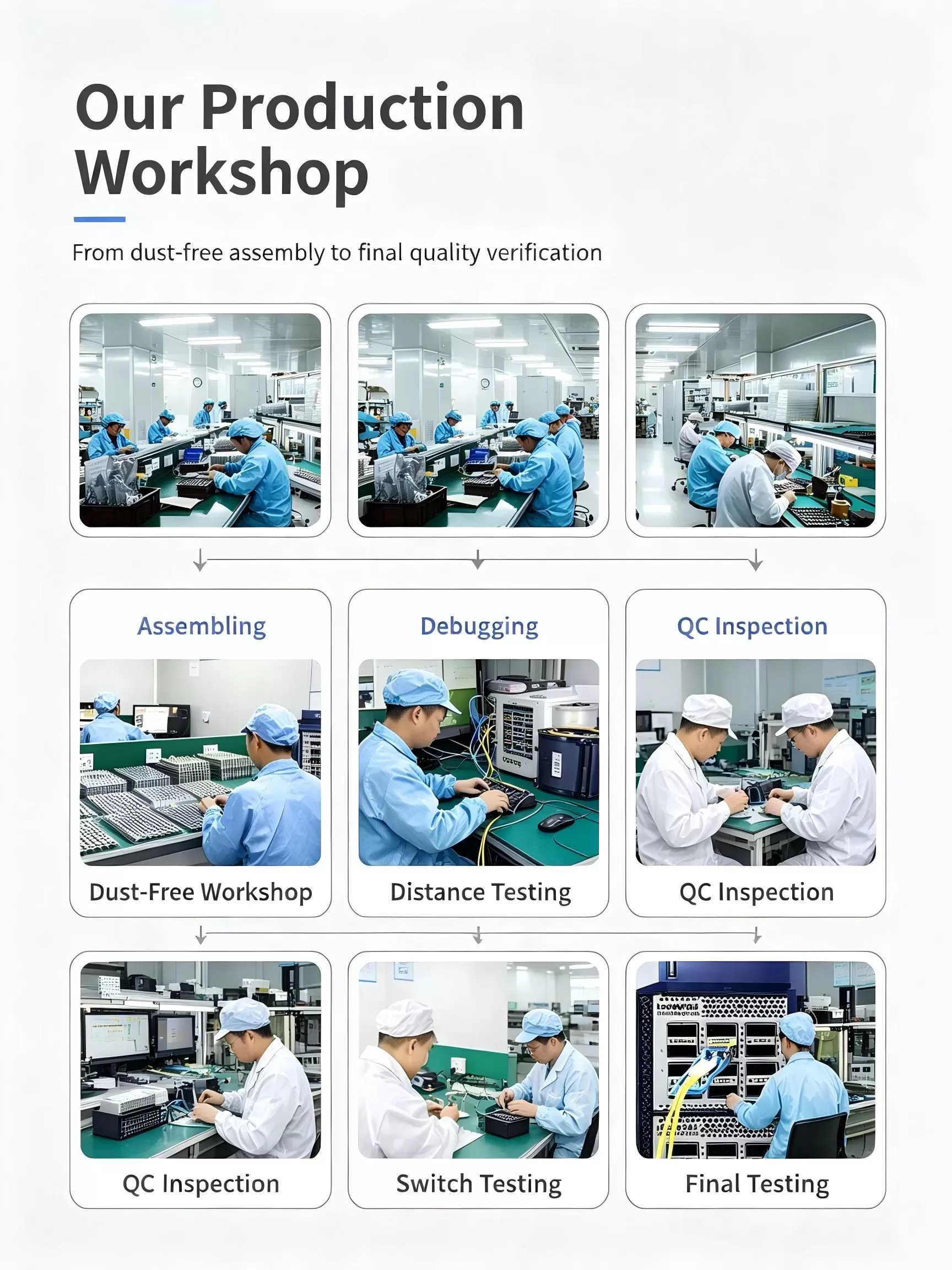
APEX is a communication technology brand focused on optical transceivers, telecom synchronization products, and network infrastructure equipment. We provide products and engineering support for telecom operators, data centers, mobile networks, and enterprise customers worldwide.
APEX GROUP is headquartered in Hong Kong, with our core team and supply chain operations based in China. We ship to customers across Asia, the Middle East, Europe, Africa, and the Americas.
We are a brand owner with deep engineering partnerships. We control product design, specification, quality validation, and supply chain management. Our products are built to our specifications by qualified manufacturing partners, and we handle all testing, coding, and quality assurance before shipment.
Yes. We code transceivers to match the host platform requirements of major switch and router vendors including Cisco, Juniper, Arista, HPE, Huawei, Nokia, and others. Tell us your platform model and required OS version, and we will ship modules that are recognized natively by your equipment.
Datasheets, compatibility matrices, and S-parameter reports are available for all standard products. Contact our sales team or visit the product pages on our website to request documentation.
Provide us with your switch make, model, and OS version. We code the transceiver firmware accordingly before shipment. If you are testing for the first time, we recommend ordering a sample unit to validate compatibility in your specific environment before placing a volume order.
Switch vendors occasionally introduce transceiver whitelisting in new OS releases. We track major platform updates and can provide recoded firmware matching the new OS requirements. Contact technical support if your existing APEX modules stop being recognized after a switch upgrade.
Contact our sales team by email, WhatsApp, or WeChat with your part number and quantity. We will confirm pricing, lead time, and shipping options. For first-time customers, we typically recommend starting with a sample order to validate compatibility before scaling to production volumes.
We ship via DHL, FedEx, and UPS for express delivery, typically 3-7 business days to most destinations. For volume orders, we also offer air freight and sea freight options. We can ship on your courier account or ours, and we handle all export documentation.
Sample orders start from 1-2 units for evaluation. For production orders, MOQ varies by product type, typically 10-50 units for standard transceivers. Contact us for specific product MOQs.
We accept wire transfer (T/T) as our standard payment method. For established customers, we can offer net-term payment arrangements. Contact our sales team to discuss payment terms.
All APEX products come with a 3-year standard warranty against manufacturing defects. We offer advance replacement for defective units, shipping the replacement before you return the failed unit to minimize downtime. For full details, visit our After-Sales Service page.
Contact us by email, WhatsApp, or WeChat. Describe your issue with as much detail as possible, including switch model, OS version, transceiver part number, and the problem you are seeing. Our support engineers will respond within one business day.
Yes, we strongly encourage sample testing. Order 1-2 units of each model you plan to deploy. Test them in your switches with your fiber plant and traffic load. Once validated, we can proceed with production quantities.
Yes. Many of our customers are telecom operators and government networks requiring 5-10 year supply continuity. We offer lifecycle management commitments with advance notification of any changes. See our Global Supply Chain page for details on long-term supply programs.

APEX GROUP LIMITED
Phone: 85298213834
WhatsApp: 85298213834
Email: Info@apexallinone.com


