

Communication Products
Optical Transceivers · Telecom Synchronization · Network Infrastructure · Custom Solutions
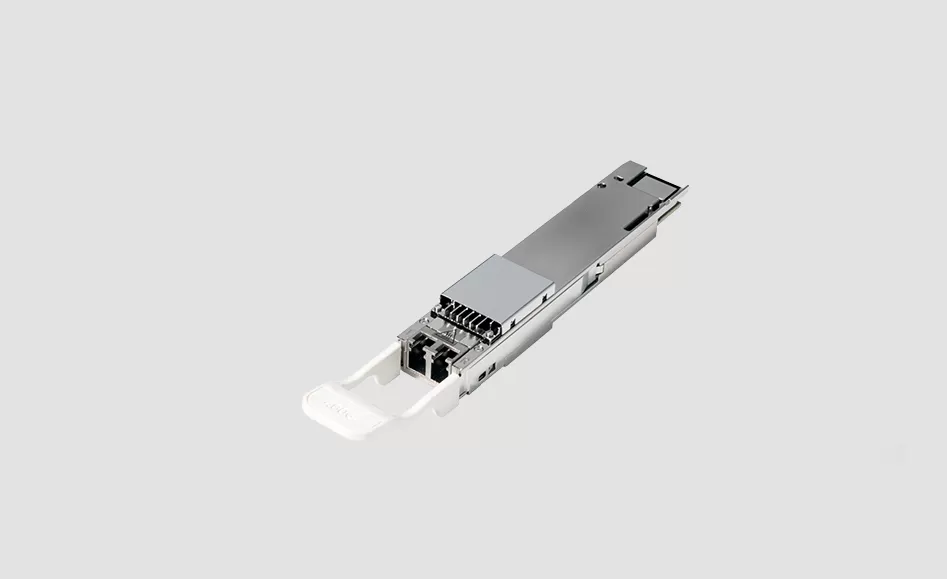
A coherent pluggable puts a full coherent line interface into a switch or router cage, so a wavelength can be added without a transport shelf. The market around that idea has split into families rather than a single product: a metro class defined by an early multi source agreement, and a wider set of extended reach modes sold under the ZR+ and OpenZR+ labels, which carry the same physical format at higher performance and longer reach.
The effect for a buyer is that one cage can hold parts with very different reach, modulation and interoperability behaviour, so the label on the box no longer says enough. The column behind this page is coherent optics, the metro class is covered on 400G ZR DCI, and the rate families are on optics selection guides.
A multi source agreement fixes the line rate, the modulation, the forward error correction and the optical interface, so that parts from different makers interoperate on the same link. That is the point of the OpenZR+ work: it extends the earlier metro specification with higher gain forward error correction and adds line rates below the headline rate, turning one specification into a family of modes with different reaches.
For a network builder the benefit is procurement rather than technology, because two sockets in the same router, filled from two sources, will come up as a link. For a buyer the consequence is that the mode list is the specification, and a quotation naming the family without the modes cannot be compared with another.
| Module | Rate | Media / wavelength | Reach class | Where it usually lands |
|---|---|---|---|---|
| Metro class coherent pluggable | 400G | SMF, C band tunable | Metro and short DCI class | Router ports on amplified metro links |
| Extended reach coherent pluggable | 400G | SMF, C band tunable | Regional class | Metro to regional spans with amplifier sites |
| OpenZR+ modes at lower line rates | 100G to 300G | SMF, C band tunable | Longer than the same part at full rate | Spans where the headline rate will not close |
| OpenZR+ mode at full rate | 400G | SMF, C band tunable | Regional class | Multi vendor links that must interoperate |
| 800G coherent pluggable | 800G | SMF, C band tunable | Metro to regional class | New capacity onto an existing line system |
| Coherent transponder and muxponder cards | 100G to 800G | SMF, C band tunable | Per card and mode | Shelves where client ports are grey |
| Fixed grid coherent modules | 100G and 200G | SMF, C band fixed channel | Metro to long haul class | Links with a settled channel plan and no growth |
Reach is a property of the mode as much as of the module, so the working limit is the computed budget for the chain rather than a figure on a data sheet. The pluggable route is compared on coherent pluggable optics, the long distance side on long haul coherent 400G and 800G, and the shelf route on 400G transponder and muxponder cards.
Forward error correction is where the extended reach families earn their place. A stronger code tolerates a worse signal to noise ratio at the receiver, which either extends the distance a rate closes over or allows the same distance at a higher rate. That is why a coherent enquiry should start with the mode list: ask which modes the link must support, work out which of them closes on the measured chain, and only then compare hardware.
A coherent pluggable needs a cage that supports it, a host that recognises the part, and enough power and cooling for a module that draws more than a grey optic. Not every port that physically accepts the form factor will run the coherent mode, and the host software release is part of the check. Where the client side is grey, where a shelf already has space, or where the required mode is unsupported in a pluggable, a transponder or muxponder card is the better answer.
Two parts that implement the same mode should come up as a link, and multi source agreements exist to make that predictable. The remaining variables are on the line side: the grid and the target channel, the launch power target, the amplifier spacing, and the number of spans the chain carries. Where a route crosses more than one platform, the supported mode list of both ends belongs in the request.
A coherent part is coded for the platform named on the request, tested on that model, and it is not manufactured by that brand. Coded parts for the common platforms are collected on the Cisco, Juniper and Arista pages. Spares are counted by link family rather than by channel, since a tunable part covers every channel in the band, and the spare should carry the same mode list as the working part.
Is ZR+ a standard?
The label covers extended reach coherent pluggables as a group. The parts that interoperate predictably are built to a multi source agreement, so ask for the mode list rather than the label.
Why do some parts offer 100G and 200G as well as 400G?
Because the same hardware reaches further at a lower line rate. Where a 400G channel will not close on the chain, a lower rate mode often will.
Can a coherent pluggable replace a transport shelf?
For router to router links on an amplified line system, yes. Where the client side is grey or the mode is unsupported, a shelf card remains the route.
Do both ends have to use the same brand of module?
No, provided both ends implement the same mode. The mode list of each end belongs in the request so it can be checked before the parts ship.
What do you need to quote a coherent pluggable project?
The span list with losses and amplifier positions, the required mode list and target rate, the host platform and release at each end, the grid and target channel, and the quantity per part with spares on a separate line.
Send the span list with losses, the required mode list and the host platform at each end, and we come back with the mode that closes on the chain, the part per position and the spare lines set out separately. Related reading: collapsed IP over DWDM, DWDM metro transport and all optics selection guides.
APEX is a communication technology brand focused on optical transceivers, telecom synchronization products, and network infrastructure equipment. We provide products and engineering support for telecom operators, data centers, mobile networks, and enterprise customers worldwide.
APEX GROUP is headquartered in Hong Kong, with our core team and supply chain operations based in China. We ship to customers across Asia, the Middle East, Europe, Africa, and the Americas.
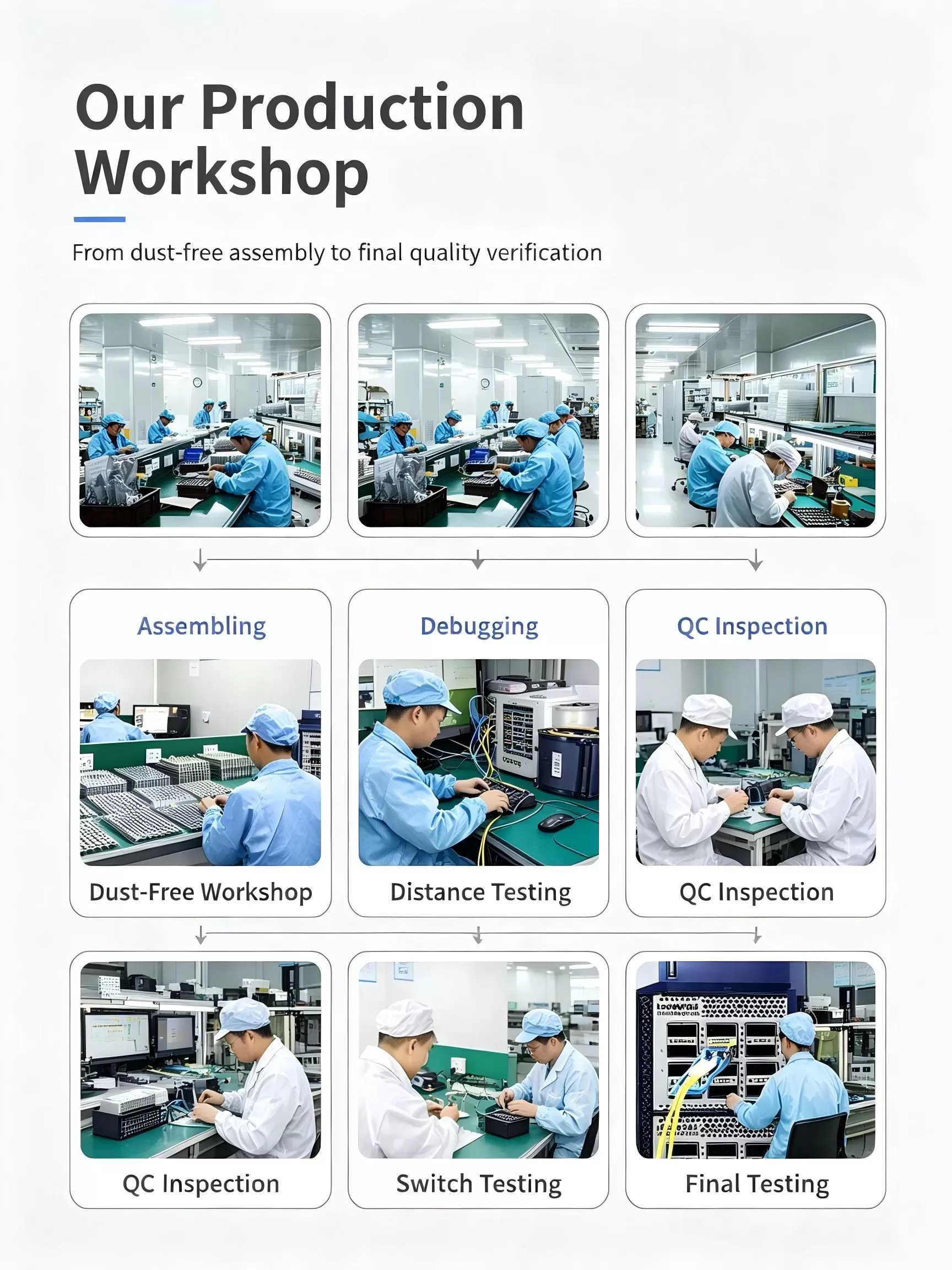
We are a brand owner with deep engineering partnerships. We control product design, specification, quality validation, and supply chain management. Our products are built to our specifications by qualified manufacturing partners, and we handle all testing, coding, and quality assurance before shipment.
Yes. We code transceivers to match the host platform requirements of major switch and router vendors including Cisco, Juniper, Arista, HPE, Huawei, Nokia, and others. Tell us your platform model and required OS version, and we will ship modules that are recognized natively by your equipment.
Datasheets, compatibility matrices, and S-parameter reports are available for all standard products. Contact our sales team or visit the product pages on our website to request documentation.
Provide us with your switch make, model, and OS version. We code the transceiver firmware accordingly before shipment. If you are testing for the first time, we recommend ordering a sample unit to validate compatibility in your specific environment before placing a volume order.
Switch vendors occasionally introduce transceiver whitelisting in new OS releases. We track major platform updates and can provide recoded firmware matching the new OS requirements. Contact technical support if your existing APEX modules stop being recognized after a switch upgrade.
Contact our sales team by email, WhatsApp, or WeChat with your part number and quantity. We will confirm pricing, lead time, and shipping options. For first-time customers, we typically recommend starting with a sample order to validate compatibility before scaling to production volumes.
We ship via DHL, FedEx, and UPS for express delivery, typically 3-7 business days to most destinations. For volume orders, we also offer air freight and sea freight options. We can ship on your courier account or ours, and we handle all export documentation.
Sample orders start from 1-2 units for evaluation. For production orders, MOQ varies by product type, typically 10-50 units for standard transceivers. Contact us for specific product MOQs.
We accept wire transfer (T/T) as our standard payment method. For established customers, we can offer net-term payment arrangements. Contact our sales team to discuss payment terms.
All APEX products come with a 3-year standard warranty against manufacturing defects. We offer advance replacement for defective units, shipping the replacement before you return the failed unit to minimize downtime. For full details, visit our After-Sales Service page.
Contact us by email, WhatsApp, or WeChat. Describe your issue with as much detail as possible, including switch model, OS version, transceiver part number, and the problem you are seeing. Our support engineers will respond within one business day.
Yes, we strongly encourage sample testing. Order 1-2 units of each model you plan to deploy. Test them in your switches with your fiber plant and traffic load. Once validated, we can proceed with production quantities.
Yes. Many of our customers are telecom operators and government networks requiring 5-10 year supply continuity. We offer lifecycle management commitments with advance notification of any changes. See our Global Supply Chain page for details on long-term supply programs.

APEX GROUP LIMITED
Phone: 85298213834
WhatsApp: 85298213834
Email: Info@apexallinone.com


