

Communication Products
Optical Transceivers · Telecom Synchronization · Network Infrastructure · Custom Solutions
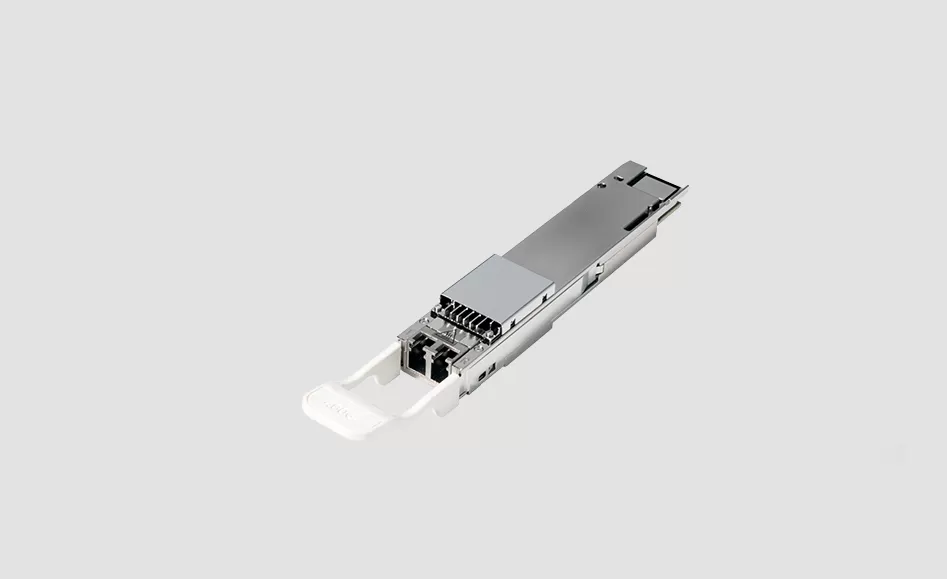
Accelerator racks have moved from a few kilowatts to tens of kilowatts, and the optics have moved with them. A rack that once held a dozen 100G links now holds 400G and 800G ports on every node, which means more modules per rack and more power per module, all inside a thermal envelope that cooling hardware has to hold.
Two cooling routes are in service. Cold plate loops take heat from the processors through plates and tubes, and immersion tanks submerge the boards in a dielectric fluid. In both cases the optics sit in a different thermal environment from the one an air cooled switch expects, so the selection question becomes which positions are inside the cooled envelope. The column behind this page is optical communication products, and the rate families are collected on optics selection guides.
Air cooled chassis move heat along the length of the box, and the airflow direction is a fixed property of the platform: a module at the exhaust end of a rack runs warmer than one at the intake.
A cold plate chassis removes most heat at the plate, and the front panel positions depend on how the loop is routed inside the box. A sealed tank removes convection entirely, so heat leaves by conduction through the fluid, and the temperature of that fluid becomes the working temperature of every module in the tank. The third case is the position that is not cooled at all: top of rack uplinks, patch panels near power shelves, and outdoor or semi-outdoor cabinets in the same fabric.
| Module | Rate | Media / wavelength | Reach class | Where it usually lands |
|---|---|---|---|---|
| 800G OSFP DR8 and 2xFR4 | 800G | SMF, 1310 nm parallel or CWDM | 500 m to 2 km class | Accelerator node and leaf ports inside the cooled zone |
| 800G QSFP-DD DR8 and 2xFR4 | 800G | SMF, same two options | 500 m to 2 km class | Cages that follow the QSFP-DD form factor |
| 400G QSFP-DD DR4 / FR4 | 400G | SMF, parallel or CWDM | 500 m to 2 km class | Leaf and spine positions on the same rack rows |
| 400G coherent and ZR class | 400G | SMF, C-band tunable | Metro and DCI class | Fabric exits where a wavelength replaces a dark fibre pair |
| 200G QSFP56 | 200G | SMF or MMF | 100 m to 10 km class | Storage and management tiers inside dense racks |
| 100G QSFP28 CWDM4 and PSM4 | 100G | SMF, CWDM or parallel | 500 m to 2 km class | Existing cabling being reused under 400G rails |
| Direct attach and active optical cables | Per lane | Copper or MMF | In-rack distances | Short links where a module pair is unnecessary |
| Industrial temperature modules | 10G to 400G | SMF, per family | Per family class | Uncooled positions, cabinets and outdoor enclosures |
Reach classes are the standard ones for each family and the working limit is the measured loss on the route. The high rate side is listed on the 800G and 400G pages, and the AI fabric case is covered by the AI and ML cluster optics guide.
A module has a rated case temperature range, and the operating point inside that range is what decides whether it lives. The number to ask about is the air or fluid temperature at the module, with the rack at full load.
Margin matters because the failure mode is not a clean stop. A module near its upper limit reports rising temperature, reduces output power, and eventually drops the link, which on a fabric port shows up as a path going down and a peer link carrying the traffic.
Power per port is a first order number in a dense rack: an 800G module draws several times what a 100G module draws, and the total for a rack row lands on the cooling capacity along with the processors.
The diagnostics page is the tool that closes the loop. Before a row is handed over, read the reported temperature and the laser bias from each position at full load, record them, and repeat after the first hot week rather than at commissioning. A position that starts high has nowhere to go when the ambient rises in summer.
Dense racks change the cabling problem as well. Parallel 800G links use multi fibre trunks, which need the right connector type and a bend radius that the rack can actually provide.
Coding follows the platform as it always does: the part is programmed for the switch or accelerator platform named on the request, tested on that model, and it is not manufactured by that brand. Coded parts for the common platforms are collected on the Cisco, Arista and Mellanox pages, and the same rule applies to each.
Spares are more urgent here than in a traditional rack, because one module covers a larger share of the capacity, so hold a coded spare per part group.
Can a standard temperature module be used in an immersion tank?
Only if the fluid temperature at the module stays inside its rated range, which comes from the platform and the cooling arrangement rather than the module data sheet.
Do the optics need to change when a rack moves to cold plates?
The parts may stay the same if the positions stay inside the rated range, but the temperature at the module has to be read and recorded again after the change.
Is a higher power module always the hotter one?
Not necessarily, because efficiency differs between parts. Power per port is the planning number and the reported temperature is the operating number.
Should an 800G rack use modules or cables for short links?
For links inside the rack, cables are usually simpler and lower power. Modules are for anything leaving the rack row.
What do you need to quote a high density rack build?
The platform models with releases, the positions with their cooling arrangement, the measured distances and loss, the cable and connector type, the temperature grade per position, and the quantity per part with spares as separate lines.
Send the platform models with releases, the position list with cooling arrangement and the measured routes, and we come back with a part per position, the cable and connector to match and the coded spare lines set out separately. Related reading: 800G AI data centre interconnect, 400G leaf spine and all optics selection guides.
APEX is a communication technology brand focused on optical transceivers, telecom synchronization products, and network infrastructure equipment. We provide products and engineering support for telecom operators, data centers, mobile networks, and enterprise customers worldwide.
APEX GROUP is headquartered in Hong Kong, with our core team and supply chain operations based in China. We ship to customers across Asia, the Middle East, Europe, Africa, and the Americas.
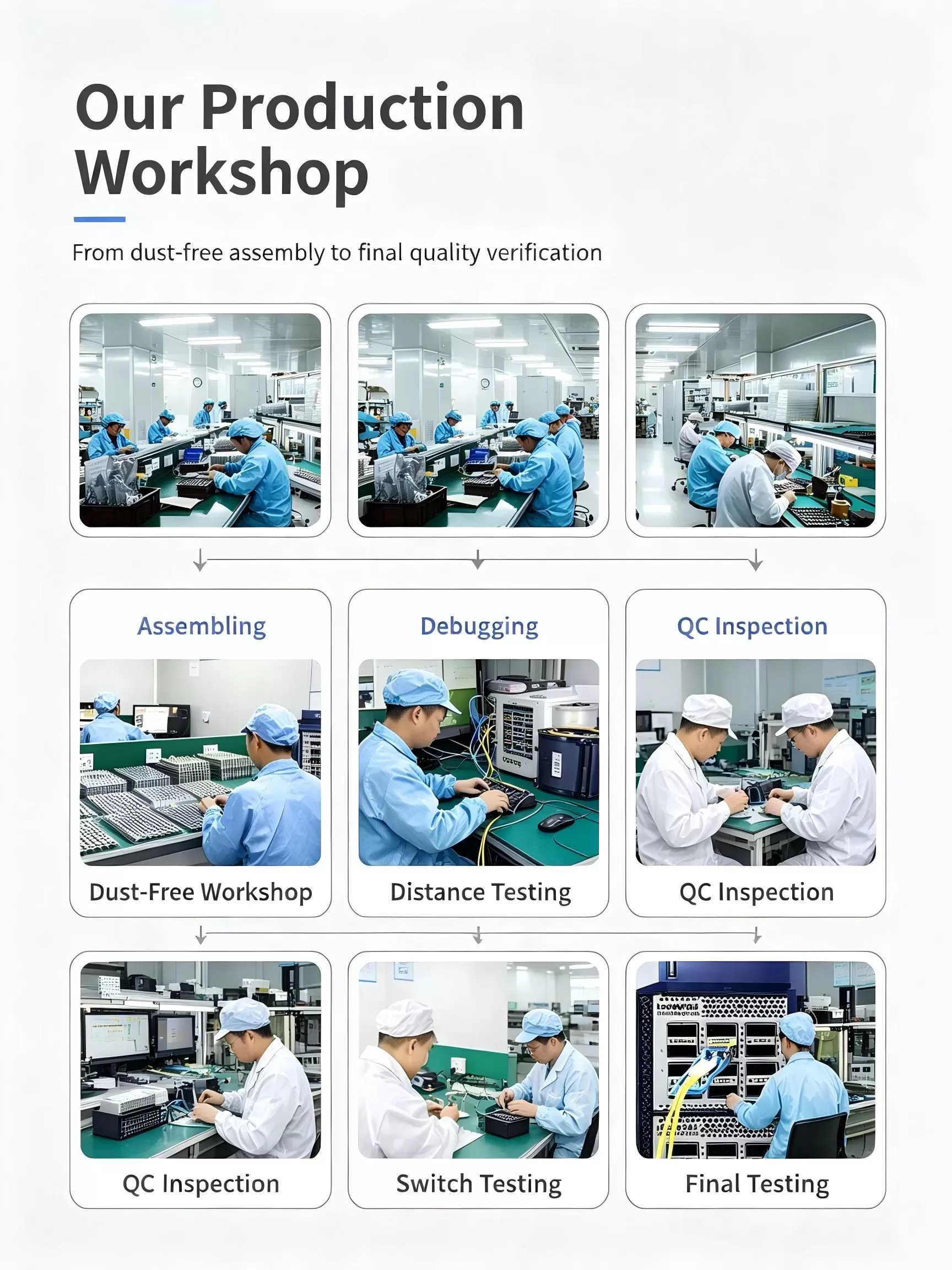
We are a brand owner with deep engineering partnerships. We control product design, specification, quality validation, and supply chain management. Our products are built to our specifications by qualified manufacturing partners, and we handle all testing, coding, and quality assurance before shipment.
Yes. We code transceivers to match the host platform requirements of major switch and router vendors including Cisco, Juniper, Arista, HPE, Huawei, Nokia, and others. Tell us your platform model and required OS version, and we will ship modules that are recognized natively by your equipment.
Datasheets, compatibility matrices, and S-parameter reports are available for all standard products. Contact our sales team or visit the product pages on our website to request documentation.
Provide us with your switch make, model, and OS version. We code the transceiver firmware accordingly before shipment. If you are testing for the first time, we recommend ordering a sample unit to validate compatibility in your specific environment before placing a volume order.
Switch vendors occasionally introduce transceiver whitelisting in new OS releases. We track major platform updates and can provide recoded firmware matching the new OS requirements. Contact technical support if your existing APEX modules stop being recognized after a switch upgrade.
Contact our sales team by email, WhatsApp, or WeChat with your part number and quantity. We will confirm pricing, lead time, and shipping options. For first-time customers, we typically recommend starting with a sample order to validate compatibility before scaling to production volumes.
We ship via DHL, FedEx, and UPS for express delivery, typically 3-7 business days to most destinations. For volume orders, we also offer air freight and sea freight options. We can ship on your courier account or ours, and we handle all export documentation.
Sample orders start from 1-2 units for evaluation. For production orders, MOQ varies by product type, typically 10-50 units for standard transceivers. Contact us for specific product MOQs.
We accept wire transfer (T/T) as our standard payment method. For established customers, we can offer net-term payment arrangements. Contact our sales team to discuss payment terms.
All APEX products come with a 3-year standard warranty against manufacturing defects. We offer advance replacement for defective units, shipping the replacement before you return the failed unit to minimize downtime. For full details, visit our After-Sales Service page.
Contact us by email, WhatsApp, or WeChat. Describe your issue with as much detail as possible, including switch model, OS version, transceiver part number, and the problem you are seeing. Our support engineers will respond within one business day.
Yes, we strongly encourage sample testing. Order 1-2 units of each model you plan to deploy. Test them in your switches with your fiber plant and traffic load. Once validated, we can proceed with production quantities.
Yes. Many of our customers are telecom operators and government networks requiring 5-10 year supply continuity. We offer lifecycle management commitments with advance notification of any changes. See our Global Supply Chain page for details on long-term supply programs.

APEX GROUP LIMITED
Phone: 85298213834
WhatsApp: 85298213834
Email: Info@apexallinone.com


